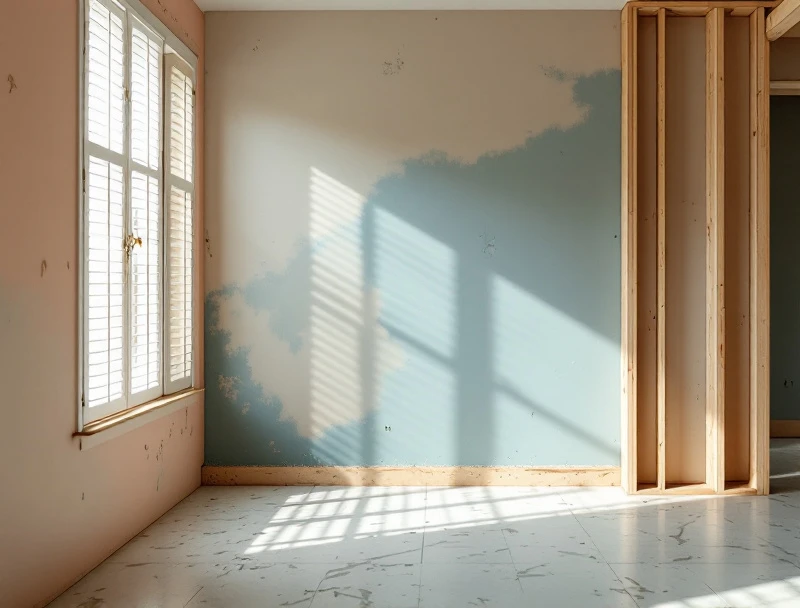
Works to IICRC S520
Every project follows the IICRC S520 reference for professional mold remediation.
Florida Mold-Services Framework IICRC S520 Reference
(305) 655-3290 Hablamos Español
Hialeah · Mold Removal
Our specialists coordinate inspection, testing, and IICRC S520 remediation across Hialeah and inner Miami-Dade — every project documented for the homeowner, the buyer, or the insurance adjuster who needs it.
How it works
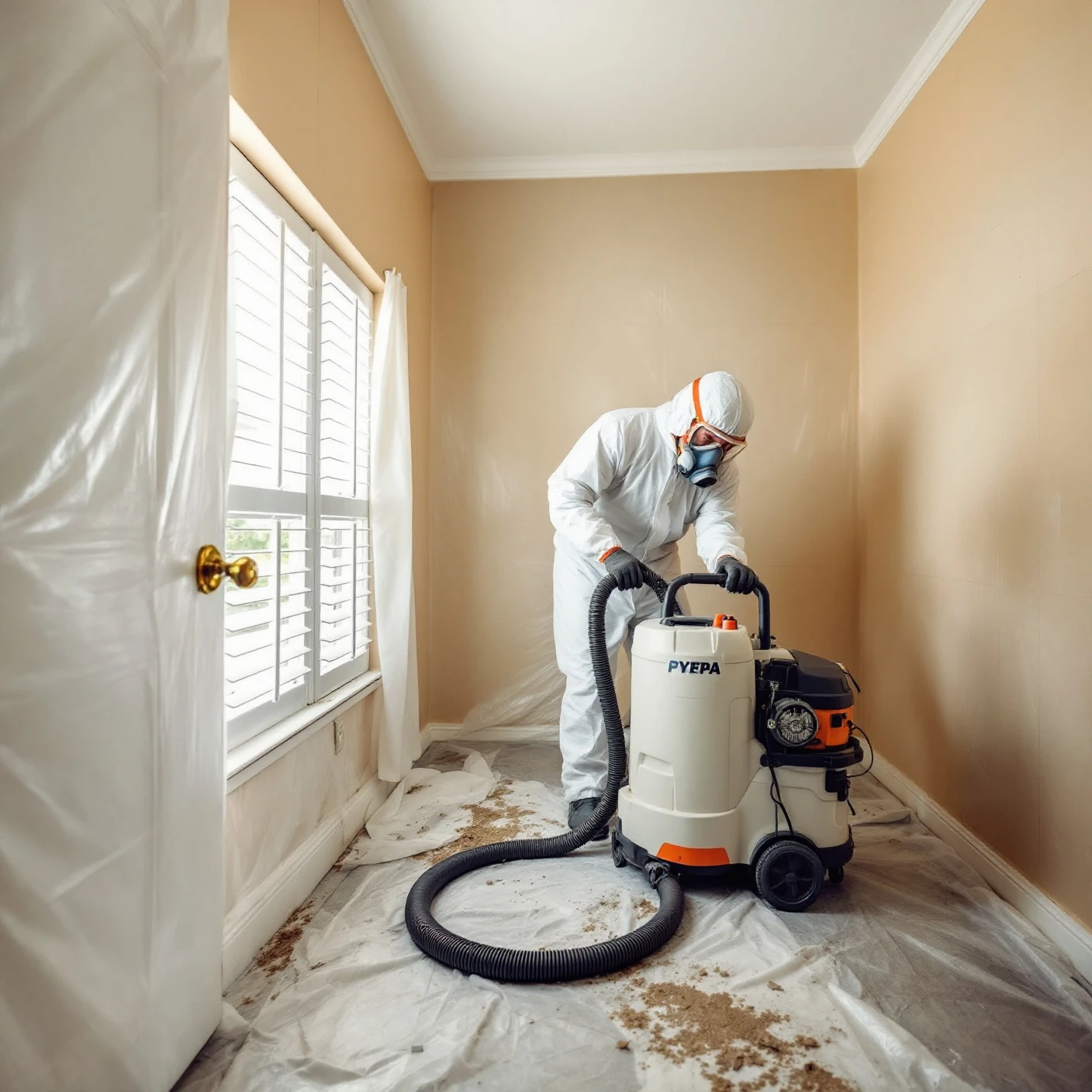
Professional mold remediation is a structured six-step process — not a spray-and-wipe job. Every project we carry out references the IICRC S520 standard and operates within Florida's Chapter 468 mold-services framework. Here's exactly what happens from your first call to the final clearance letter.
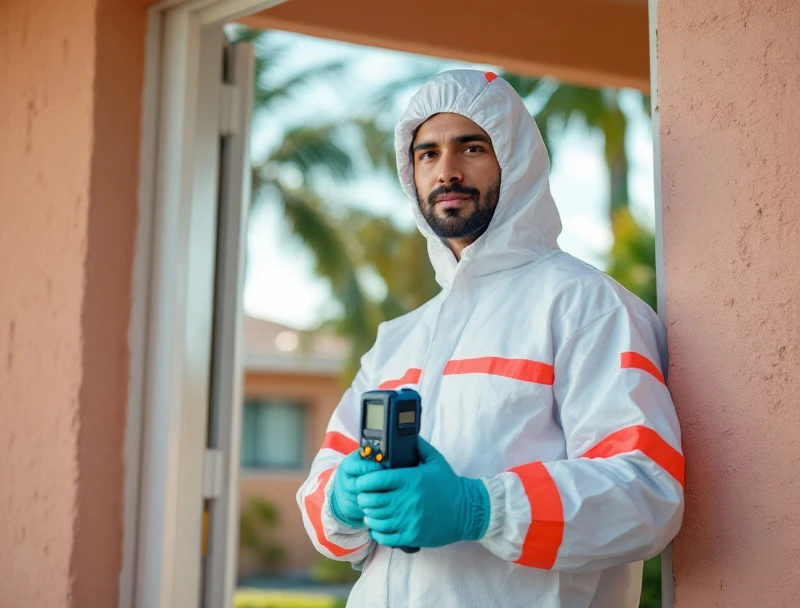
A Florida-licensed mold assessor starts with a visual survey, a calibrated moisture meter reading every suspect surface, and thermal imaging to reveal cold spots behind concrete-block walls — the first indicator of hidden moisture. You receive a written scope of work before any demolition begins.
Six-mil poly-sheeting barriers isolate the affected zone from the rest of the home. A negative-air machine maintains lower pressure inside the containment, so mold spores cannot migrate to clean areas during active work. Technicians use a decontamination chamber to enter and exit safely.
Mold cannot be bleached away or painted over — the IICRC S520 reference requires physical removal of contaminated porous materials including drywall, insulation, and wood. Structural surfaces are then HEPA-vacuumed and treated with EPA-registered antimicrobial agents.
Commercial dehumidifiers and high-velocity air movers are staged to drive moisture from framing, concrete block, and subfloor assemblies. Daily moisture logs track readings against IICRC S500 drying standards. Drying in Hialeah's wet-season humidity demands equipment sized for the load — not residential units.
A separate Florida-licensed mold assessor — not the remediation crew — conducts the clearance inspection. Florida's Chapter 468 Part XVI framework requires this separation. Clearance includes a visual inspection and air sampling processed by a third-party laboratory.
You receive a complete project file: written scope of work, pre- and post-remediation photos, daily moisture logs, and the clearance letter. This package is prepared in the format Florida insurance adjusters expect for storm-related or water-event claims.
One of the most common misunderstandings in Florida mold work is the belief that bleach kills mold. The IICRC S520 reference is explicit: bleach does not penetrate porous materials like drywall or wood framing, and surface discoloration after bleach treatment does not mean the underlying mold colony is gone. Physical removal is the only compliant approach for porous building materials — and it is what every project in this six-step process delivers.

What we cover
Seven service lines — each built around a distinct Florida mold scenario. From a pre-purchase inspection to a post-hurricane whole-house remediation, every project is scoped before work begins.
Our core service is mold remediation — IICRC S520 Level I–V workflow covering containment, source removal, structural drying, and independent clearance. When you need an assessment first, mold inspection delivers a moisture-mapped written scope under Florida's Chapter 468 assessor framework. For laboratory confirmation before committing to remediation, independent mold testing includes air sampling, surface tape lifts, and ERMI or HERTSMI-2 DNA analysis processed by third-party labs. When Stachybotrys or toxigenic species are confirmed, black mold removal applies full Level III–V containment with HEPA air scrubbing and documented disposal. After storm or roof-leak events, attic mold removal addresses sheathing remediation and ventilation correction together. For shower, tile, and wall-cavity situations, bathroom mold remediation removes tile and treats the framing behind it. When the HVAC system is involved, AC and air duct mold removal follows the NADCA ACR 2021 protocol alongside IICRC Level V containment.
Self-assessment
Answer six questions about what you're seeing and smelling. The quiz scores your responses against IICRC S520 remediation levels and gives you a starting point for your next conversation with a licensed assessor.
60-Second Self-Assessment
Answer six quick questions to get a Hialeah-specific recommendation. Nothing stored; no email required.
Pricing reference
Mold remediation cost depends on the affected area's size, the substrate involved (concrete block dries differently than drywall), and the IICRC S520 remediation level required. The ranges below reflect common Hialeah project scopes — not national averages. A written estimate from a licensed assessor before any demolition is the only accurate number.
Surface mold — tile, grout, or caulk
$300 – $800 · bathroom-scale work
Single room — drywall, minor affected area
$800 – $2,500 · IICRC Level I–II
Multi-room — post-water-event
$2,500 – $5,500 · IICRC Level III
Attic sheathing remediation
$1,500 – $4,500 · roof-leak common scope
AC evaporator coil + ductwork
$800 – $3,000 · NADCA ACR scope
Post-hurricane whole-house
$5,000 – $15,000 · IICRC Level IV–V
Post-remediation clearance testing
$250 – $600 · assessor fee (separate)
Typical single-room remediation
IICRC Level I–II scope with drywall replacement
Post-hurricane whole-house range
IICRC Level IV–V with full containment
Independent clearance testing
Billed separately by the assessor — required by FL Ch. 468
Coverage map
We serve all seven Hialeah ZIP codes and adjacent Miami-Dade communities. Response time targets vary by zone — call to confirm same-day or next-morning availability for your address.
Our approach
Six differentiators that matter when you're dealing with mold in a South Florida home — not marketing claims, but the protocols and practices we follow on every project.
Every project follows the IICRC S520 reference for professional mold remediation.
Aligned with Florida's Chapter 468 Part XVI mold-services framework, including the assessor-remediator separation rule.
HVAC work follows the NADCA ACR 2021 protocol — coil, drain pan, plenum, ductwork, and air handler in scope.
Post-remediation verification is arranged through a separate Florida-licensed mold assessor.
Post-storm and water-damage workflows refined across South Florida hurricane seasons.
Scope-based estimates with cost ranges before any demolition begins.
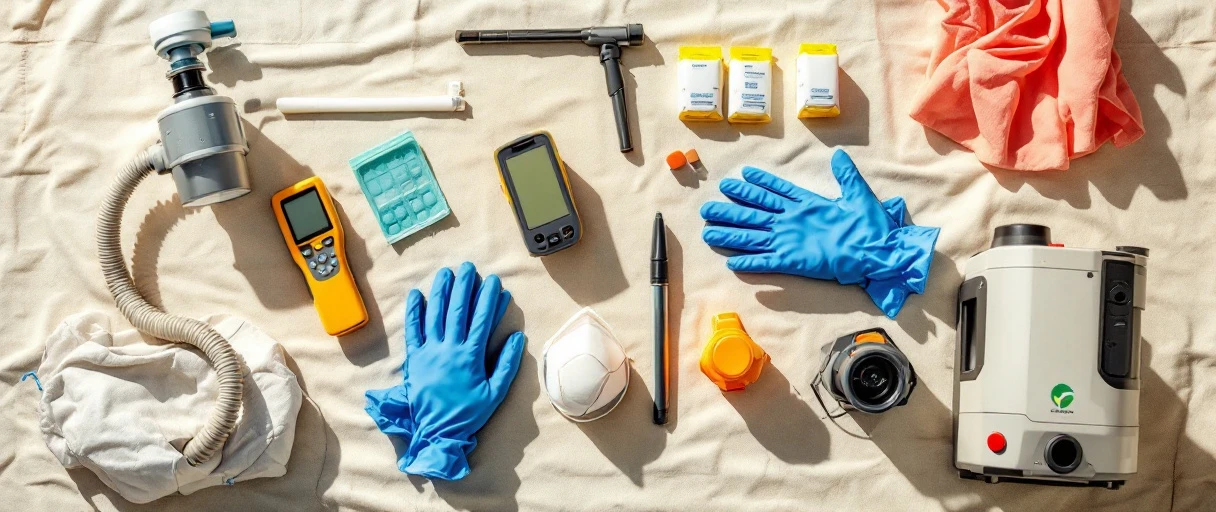
Professional mold remediation requires professional-grade equipment. Here is what arrives at every Hialeah project — hover or tap a card to see how each tool is used.
Hialeah environmental context
No city in the continental United States faces a more favorable mold environment than South Florida in summer. Hialeah's average dew point climbs above 70 °F from May through October — the threshold at which most indoor mold species can sustain growth without any additional moisture source beyond the ambient air. When you add Hialeah's aging housing stock, frequent afternoon thunderstorms, and a six-month hurricane season, the conditions for mold growth are present year-round, not just after flooding events.
| Factor | Jan | Feb | Mar | Apr | May | Jun | Jul | Aug | Sep | Oct | Nov | Dec |
|---|---|---|---|---|---|---|---|---|---|---|---|---|
| Avg dew point (°F) | 60 | 60 | 62 | 66 | 70 | 73 | 74 | 75 | 74 | 71 | 65 | 61 |
| Wet season | — | — | — | — | Yes | Yes | Yes | Yes | Yes | Yes | — | — |
| Hurricane window | — | — | — | — | — | Yes | Yes | Yes | Yes | Yes | Yes | — |
| Mold-risk tier | MED | MED | MED | MED | HIGH | HIGH | HIGH | HIGH | HIGH | HIGH | MED | MED |
Sources: NOAA dew-point climatology for Miami-Dade · Atlantic hurricane season Jun 1–Nov 30.
The calendar above shows why mold season in Hialeah is not a short window — it's a sustained six-month period where building materials, HVAC systems, and roof assemblies are under continuous moisture stress. Even during the "low-risk" months of November through April, average dew points remain in the 60–66 °F range, which still supports growth of Cladosporium and Aspergillus in poorly ventilated spaces.
Two of the most common post-storm mold findings in Hialeah involve parts of the home that homeowners rarely inspect: the attic and the bathroom wall cavity. After a hurricane or tropical storm, roof sheathing absorbs rain water through micro-cracks in tile or missing ridge vent caps. Within 48–72 hours in Hialeah's August humidity, Stachybotrys and Aspergillus can begin colonizing plywood sheathing. Our attic mold removal service addresses roof-deck sheathing remediation alongside ventilation correction — because treating mold without fixing the airflow that caused it leads to recurrence within one season.
Bathroom wall cavities present a different but equally common problem. Hialeah's older housing stock frequently has bath-fan ductwork that terminates inside the attic rather than at a wall or roof cap — a code violation that dumps warm, humid air directly into the attic space on every shower cycle. The result is persistent moisture in the wall cavity behind tile, which often goes undetected until grout darkens or a moisture meter survey finds readings above 16% in the surrounding drywall. Bathroom mold remediation in these scenarios requires removing tile and drywall to reach the cavity, treating the framing, and correcting the exhaust termination — not just re-grouting the surface.
Self-assessment guide
Mold in Hialeah homes often appears long before it's visible. The most reliable early indicator is a musty, earthy smell that intensifies after rain or when the AC system runs — because the air handler is moving spore-laden air from a contaminated plenum or duct through the living space. By the time visible dark spots appear on a ceiling or wall, the colony has typically been present for weeks or months. In concrete-block construction, this delay between moisture intrusion and visible mold is even longer than in wood-frame homes, because block absorbs moisture slowly and releases it slowly — giving mold time to establish inside wall cavities long before any surface indicator appears. A licensed mold assessor with thermal imaging equipment can identify cold spots (indicators of moisture) inside block walls at the assessment stage, often before any visible mold growth or detectable odor is present in the room.
The most important warning sign is often the one that gets rationalized away: the musty smell that "only happens when it rains." In a concrete-block home, rain drives moisture through exterior walls and around window frames at rates that increase dramatically with wind-driven rain — a condition common in Hialeah from June through November. If you smell mold after rain and the smell dissipates within a day, the colony is likely in a wall cavity where it dries partially but never fully.
HVAC and indoor air quality
In Hialeah's climate, the HVAC system is simultaneously the most important tool for controlling indoor humidity and the most common hidden source of mold contamination. A central air handler running in a humid, poorly sealed attic will accumulate condensation on the evaporator coil drain pan during every operating cycle. When the pan is not properly sloped or the drain line is partially blocked — both common maintenance findings in Hialeah's mid-century housing stock — standing water in the air handler becomes a Cladosporium and Aspergillus growth site within 48 hours.
The result is that the AC system distributes mold spores to every room in the house on every cooling cycle — making the air quality problem building-wide even when the visible mold source is confined to one location. This is why post-remediation air quality testing frequently shows elevated spore counts across multiple rooms even when visible mold was found in only one. Our AC and air duct mold removal service addresses evaporator coils, drain pans, plenums, ductwork, and air handlers under the NADCA ACR 2021 protocol alongside IICRC S520 Level V containment procedures.
Mini-split systems in Hialeah present a related but distinct issue. The indoor air handler of a ductless mini-split accumulates organic matter in the evaporator fins and drain pan with no ductwork to distribute the problem. However, the growth occurs within centimeters of the fan blade that circulates air into the occupied space. Regular coil cleaning — using proper antimicrobial agents applied per the NADCA ACR protocol, not household cleaners — is the first line of prevention. When contamination is established, a full coil removal and remediation is necessary.
After any mold remediation project that touches or suspects HVAC involvement, a post-remediation clearance air sample should include the area directly under a supply register — not just the remediated room. Clearance that only samples the immediate work area can miss HVAC-distributed contamination that persists after the visible source is removed.
Florida regulatory context
Florida is one of a small number of states that license mold professionals separately from general contractors. Chapter 468 Part XVI of the Florida Statutes — the Mold-Related Services Law — establishes two distinct license classes: the Florida Mold Assessor and the Florida Mold Remediator. The law prohibits one entity from performing both assessment and remediation on the same project. This assessor-remediator separation exists to prevent a conflict of interest: the same company that profits from finding mold should not be the one deciding how much mold there is or whether remediation has been completed successfully.
The Florida Mold Assessor conducts the initial investigation: the visual survey, moisture mapping, thermal imaging, and (if warranted) air and surface sampling. The assessor then produces a written scope of work that specifies what materials must be removed, what containment level is required, and what the clearance criteria are. This written scope is not optional — it is the document that protects you legally if questions arise later about whether the work was done correctly.
The Florida Mold Remediator executes the physical work described in the assessor's scope: containment, demolition of contaminated materials, HEPA vacuuming, antimicrobial treatment, and structural drying. The remediator is prohibited from making scope decisions — those belong to the assessor. After remediation is complete, the assessor (or a different licensed assessor) returns for the post-remediation clearance inspection. Only when clearance is granted is the project officially complete.
Hialeah homeowners filing insurance claims for storm-related mold should be aware that Florida insurance law and the mold-services law interact in specific ways. An insurer may require that a licensed assessor's written scope accompany any mold claim. Some policies specify that remediation must follow a recognized standard — IICRC S520 is the most commonly cited reference. Providing the complete documentation package (assessor scope, remediation invoice, clearance letter, and moisture log) is the most reliable way to support a claim and avoid a disputed settlement.
For HVAC-related mold work, an additional regulatory layer applies: the NADCA ACR 2021 standard governs assessment, cleaning, and restoration of HVAC systems. A licensed mold remediator performing duct remediation must follow both the IICRC S520 framework for the surrounding building materials and the NADCA ACR protocol for the air handling system itself. A clearance test that only samples the remediated room — without verifying air quality at a supply register — may not adequately confirm that the HVAC component of the contamination has been resolved.
Step-by-step guide
Most homeowners who find mold in their Hialeah home make the same two mistakes: they either do nothing (waiting to see if it spreads) or they attempt to clean it with bleach or a store-bought mold spray. Neither approach is correct. Here is what the IICRC S520 reference and Florida's mold-services framework recommend as the appropriate immediate response.
Step 1 — Stop the moisture source. Mold cannot grow without moisture. If the source of moisture is still active — a dripping pipe, a leaking roof, a running appliance — stopping that source is the single most important first action. Mold remediation performed while the moisture source is still active will fail within weeks. If the source is a roof leak, place buckets and protect valuables, but do not attempt roof repairs during active rain. Call a licensed roofer for an emergency tarp or repair as soon as conditions allow.
Step 2 — Document everything before touching it. Photograph all visible mold, staining, and water damage. Note the date of discovery and the date of any water event you know about. These photos and dates form the foundation of any insurance claim and establish a baseline for the assessor's scope of work. Do not clean, paint over, or disturb the mold before documentation is complete — disturbing mold releases spores and can complicate both the assessment and the insurance claim.
Step 3 — Call a Florida-licensed mold assessor (not a remediator). The assessor's job is to determine the scope and extent of the problem before any remediation begins. An assessor who is not affiliated with a remediation company has no financial incentive to overstate or understate the problem. The written scope of work from an independent assessor is your protection against unnecessary remediation and against insufficient remediation. In Hialeah, most assessors can schedule an initial visit within 24–48 hours for non-emergency situations and same-day for active flooding events.
Step 4 — Notify your insurance company. Florida homeowner's insurance policies typically require that claims be reported promptly — delay can be grounds for a coverage dispute. Report the claim with the water-event date and photos before any remediation work begins. Ask your adjuster whether they require a licensed assessor's scope before approving remediation. Many do. Do not authorize remediation work that your insurer has not been notified about — you may be left paying the full cost if the claim is later disputed.
Step 5 — Do not run the HVAC system in the affected area. If mold is visible near any HVAC supply or return register, or if the affected area is served by a shared air handler, running the system will distribute spores throughout the building. Until the assessor has evaluated the HVAC system as part of the scope, the safest approach is to close supply registers in the affected area and minimize system operation. In Hialeah's heat, this may be uncomfortable but is significantly less costly than a building-wide remediation caused by HVAC distribution of a localized mold problem.
Get started
The first step is a conversation. Tell us what you're seeing, when the water event occurred (if applicable), and your ZIP code. We'll explain what a licensed assessment covers, what it costs, and when we can schedule it — no pressure to commit to remediation work on the same call.
For urgent situations — active flooding, post-storm access, or a closing contingency with a hard deadline — call directly at (305) 655-3290. We route urgent Hialeah calls ahead of standard scheduling.
60-second form. We call you back.
We respond during business hours, usually within an hour.
Frequently asked questions
Answers specific to Hialeah conditions, Florida licensing law, and the IICRC S520 protocol — not generic national FAQ copy.
It depends on the source of moisture. Florida homeowner's insurance policies typically cover mold that results from a sudden, accidental water event — a burst pipe, roof damage from a named storm, or an appliance leak. Gradual moisture intrusion or maintenance-related mold is usually excluded. A written scope of work from a licensed assessor, combined with pre-remediation moisture readings and photos, gives your adjuster the documentation needed to support a claim.
Yes — Florida's Chapter 468 Part XVI requires them to be different entities. The licensed mold assessor writes the scope of work and performs the clearance test. The licensed mold remediator carries out the physical remediation work. One company cannot legally perform both roles on the same project in Florida. Always ask to see both license numbers before any work begins.
Most single-room projects run 1–3 days; multi-room projects run 3–7 days. Variables include the size of the affected area, the substrate (concrete block walls dry more slowly than drywall), and ambient humidity. Hialeah's May–October wet season — when average dew points run 70–75 °F — can extend drying times by a day or more. You will receive a schedule and daily moisture logs throughout the project.
For contained single-room projects, most families can remain in unaffected areas. For whole-house or multi-room work with full negative-air containment, temporary relocation is recommended for occupants with asthma, allergies, or respiratory sensitivities — including children and elderly residents. We will advise you during the assessment based on your specific scope and household.
The IICRC S520 is the standard reference guide for professional mold remediation. It defines five remediation levels (I through V) based on the size and condition of the affected area, specifies containment and personal protective equipment requirements, and sets protocols for disposal and clearance. Working to the S520 reference gives you documented proof that the project followed a recognized professional standard — important for insurance claims, future resale, and legal protection.
Aspergillus, Cladosporium, and Penicillium are the most frequently detected species in South Florida air and building materials. These grow readily in Hialeah's year-round humidity and are commonly found in bathrooms, attic spaces, and around AC system components. Stachybotrys chartarum — often called black mold — requires extended wet conditions on cellulose materials; it is less common but does appear after flooding or sustained roof leaks. Third-party laboratory analysis is the only way to confirm species identity.
A mold inspection is a visual and moisture survey conducted by a licensed assessor. A mold test adds laboratory analysis — air sampling (spore traps), surface sampling (tape lifts or swabs), or DNA-based analysis such as ERMI or HERTSMI-2. Testing can confirm species, quantify spore counts, and document conditions before and after remediation. Not every situation requires testing — a licensed assessor will advise you based on your specific conditions and goals.
Properly remediated mold does not return on its own — but an uncorrected moisture source can cause new growth. IICRC S520-compliant remediation removes the mold physically; it does not merely kill surface growth. However, if the underlying moisture problem — a slow roof leak, a condensation-prone AC system, a poorly vented bathroom fan — is not corrected, new mold growth can occur in the same or adjacent areas within weeks. The written scope of work should always identify the moisture source.
Surface-level mold jobs run $300–$800; single-room drywall work runs $800–$2,500. Post-storm or whole-house projects covering multiple affected areas run $5,000–$15,000 or more depending on scope. Attic sheathing and AC ductwork each run $1,500–$4,500 in typical Hialeah scopes. A written estimate from a licensed assessor — before any demolition — is the only way to get an accurate number for your specific situation.
We serve all Hialeah ZIP codes: 33010, 33012, 33013, 33014, 33015, 33016, and 33018. We also serve adjacent Miami-Dade communities including Hialeah Gardens, Miami Lakes, Miami Springs, Opa-locka, Medley, and Doral. Call us to confirm coverage for your specific address — response times vary by zone.
Call now or request a callback — same-day response for urgent Hialeah and Miami-Dade situations.