
Works to IICRC S520
Every project follows the IICRC S520 reference for professional mold remediation.
Florida Mold-Services Framework IICRC S520 Reference
(305) 655-3290 Hablamos Español
Hialeah · HVAC Remediation
NADCA ACR 2021 ductwork remediation and IICRC S520 Level V evaporator-coil mold removal for Hialeah homes — coil, drain pan, air handler cabinet, flex duct, and mini-split systems served by separately licensed assessment and remediation professionals.
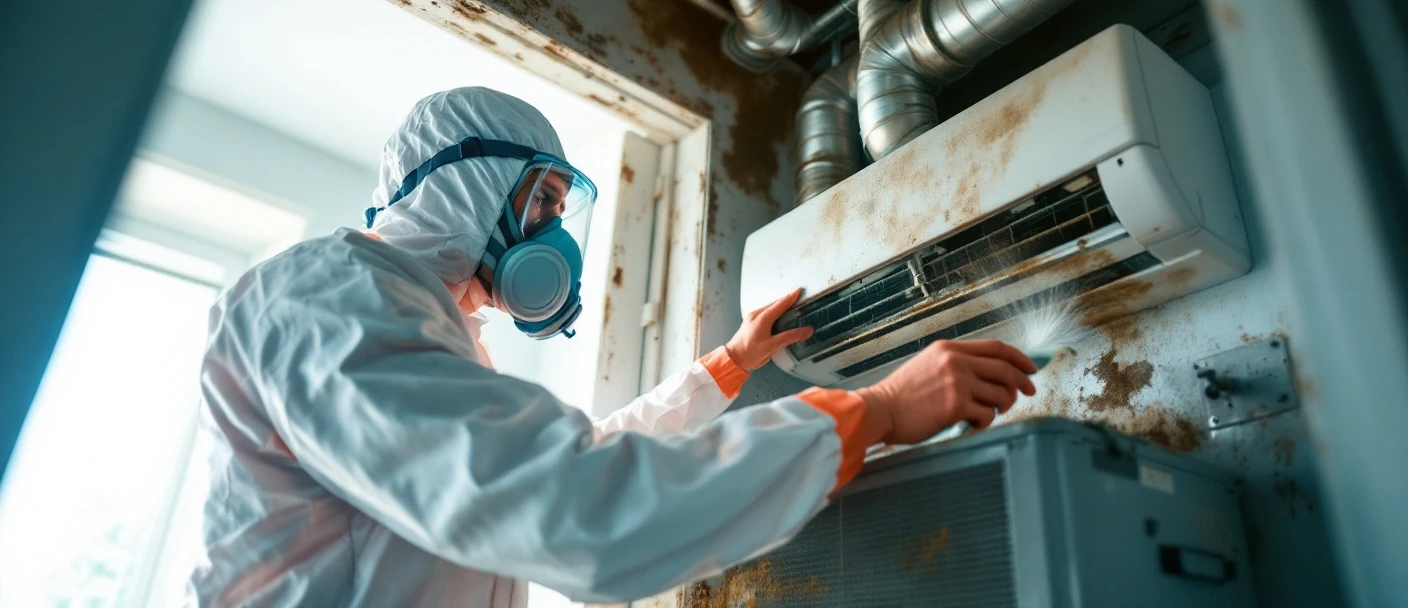
An HVAC system with active mold growth is not a localized problem — it is a delivery mechanism that routes elevated spore concentrations to every conditioned room in the building on every cycle. The evaporator coil runs at 40 to 55 degrees Fahrenheit during operation, producing continuous condensation that creates the persistently wet surface mold requires. In Hialeah, where air conditioning runs for nine months of the year, that wet surface never fully dries between cycles. Every HVAC mold project we complete follows NADCA ACR 2021 for the duct system and IICRC S520 Level V for confirmed Stachybotrys in the HVAC component — because the standard that protects the occupant is not the one that cleans the duct surfaces; it is the one that treats the source and verifies the result with downstream air sampling.
How it works
HVAC mold remediation is a five-phase project — starting with downstream air sampling that quantifies the actual spore load in the occupied space, through source identification and correction, containment, full system treatment, and post-remediation clearance sampling. The sequence is not interchangeable: cleaning the ductwork before treating the coil source, or treating the coil before stopping the drain pan overflow, produces a temporary result that recurs at the original rate.
The HVAC mold assessment begins with the system running at normal operating conditions. Supply register air samples are collected from each zone and compared to a simultaneous outdoor baseline — elevated spore counts or genera atypical for outdoor air in a specific zone indicate an active HVAC-source contamination in that air handler or duct branch. With the system then shut down, the air handler cabinet is opened for visual inspection of the evaporator coil face, drain pan, and cabinet liner. A coil inspection camera documents conditions at the coil face, drain pan bottom, and the first several feet of supply plenum. The assessment report distinguishes NADCA standard-cleaning candidates from IICRC S520 Level V mold remediation candidates based on whether confirmed mold growth is present in the system.
Evaporator coil mold growth originates from one or more of three sources: a blocked or slow condensate drain that allows the drain pan to hold standing water, an oversized air handler that short-cycles and does not run long enough to dehumidify the supply air, or an outdoor air or fresh-air intake that pulls unfiltered high-humidity outdoor air across a wet coil surface. Each source must be identified and corrected before remediation begins — treating a mold-colonized evaporator coil while the drain pan remains backed-up, or while an unconditioned air source continues to deliver moisture, produces recurrence within weeks. Source correction documentation is part of the written assessment protocol.
The air handler is shut down and locked out before any mold-affected components are disturbed. All supply registers in the zones served by the affected air handler are sealed with poly sheeting and tape to prevent disturbed spores from being distributed to occupied space if the system is accidentally energized during work. Return air grilles are also sealed. For IICRC S520 Level V work — confirmed Stachybotrys within the HVAC system — full room-level containment with HEPA air scrubbers at negative pressure is established before the air handler cabinet is opened for remediation. Level V adds this full containment step because the air handler is itself a spore distribution mechanism: opening a contaminated cabinet without containment disperses the colony load into the occupied space.
Evaporator coil remediation involves a foaming EPA-registered coil cleaner applied to the full coil face, allowed to dwell, then rinsed with the drain pan flow. Heavily contaminated coils with visible mold growth on the fins are HEPA-vacuumed before chemical treatment to remove the bulk biological load. The drain pan is cleaned with an EPA-registered antimicrobial, the primary and secondary drain lines are flushed and verified clear, and the pan is inspected for cracks or standing-water zones that cannot drain. Air handler cabinet liner — the fiberglass-faced or foam liner inside the cabinet walls — is inspected for growth and replaced if contaminated, since liner material cannot be effectively treated in place. Duct surfaces are cleaned per NADCA ACR 2021 contact-vacuum and brush methods, followed by EPA-registered antimicrobial application to duct liner and sheet-metal surfaces.
After coil treatment and drain pan service, a new high-MERV filter (minimum MERV-11 for post-remediation installations) is installed. The air handler is reassembled, the condensate drain trap is verified set and functional, and the system is energized for a test run to confirm normal operation, proper drain flow, and no ductwork leaks at reconnected joints. Post-remediation downstream air sampling is collected from each treated supply zone with the system running, compared to the pre-remediation baseline sample and to the simultaneous outdoor control. For IICRC S520 Level V projects, post-remediation clearance is conducted by a licensed Florida mold assessor independent of the remediation contractor, per Florida Statute Chapter 468.
Remediation scope
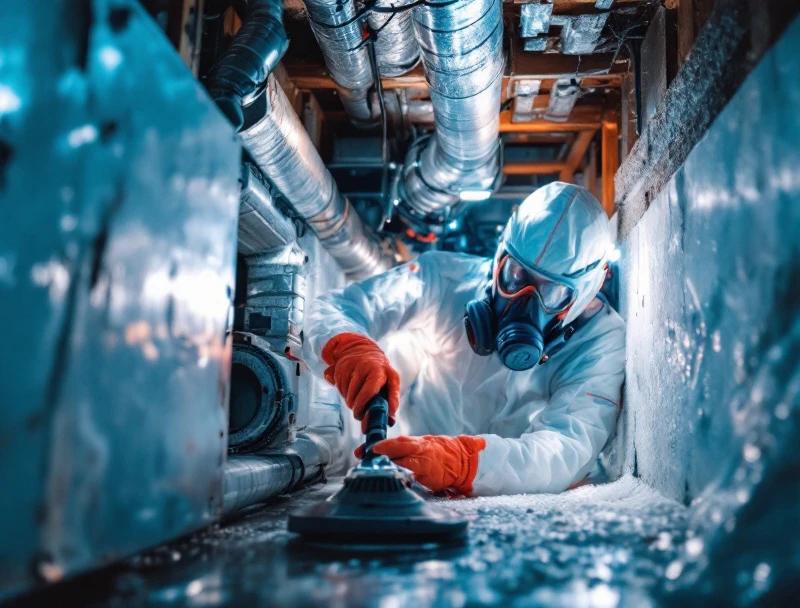
HVAC mold remediation spans eight distinct components — from the statutory pre-remediation assessment through post-remediation downstream clearance sampling. Most projects require a subset of these components; the pre-remediation assessment determines which components are indicated based on confirmed growth locations and the downstream air sampling results.
The interior walls of most residential air handler cabinets are lined with fiberglass-backed foam or rigid fiberglass liner — materials that provide both insulation and sound attenuation but that can support mold growth when the drain pan overflows or when cabinet condensation accumulates. Mold-affected liner material cannot be effectively treated in place — the fiberglass matrix traps the colony below the surface where antimicrobial sprays do not penetrate. Contaminated liner is removed and replaced with new liner material or with a closed-cell foam liner alternative that does not support mold colonization. Cabinet sheet-metal surfaces exposed after liner removal are HEPA-vacuumed and treated with EPA-registered antimicrobial before new liner is installed.
Flex duct installed in Hialeah attic spaces is particularly vulnerable to mold growth on both the exterior jacket (which collects attic condensation when the duct surface temperature drops below attic dewpoint) and the interior liner (which can collect organic debris and condensation from oversized or poorly sealed systems). NADCA ACR 2021 contact-vacuum and brush cleaning removes the bulk debris load from duct interiors. For confirmed mold growth on flex duct liner, sections with significant growth are replaced rather than cleaned in place — liner material that has been colonized cannot be returned to a non-contaminated state by surface cleaning alone.
The supply and return plenums — the sheet-metal chambers directly adjacent to the air handler that distribute conditioned air to and from the duct branches — are the highest-flow surfaces in the duct system and accumulate organic debris at the same rate as the duct network. Sheet-metal plenum surfaces that show mold growth are HEPA-vacuumed and treated with EPA-registered antimicrobial. Fiberglass duct board plenum construction that shows confirmed mold growth is treated differently than sheet-metal — the porous duct board surface requires more aggressive treatment or section replacement, since the mold penetrates into the duct-board matrix and is not fully removed by surface cleaning.
Ductless mini-split systems are among the most mold-prone HVAC equipment in Hialeah apartments and condominiums. The indoor air handler unit operates with its blower wheel, coil, and drain pan in an unsealed cabinet that circulates room air — including high-humidity bathroom and kitchen air — through a narrow evaporator coil that stays wet during operation. Blower wheels in mini-splits develop biofilm and mold growth within 2 to 4 years of typical Hialeah use. Mini-split remediation involves full unit disassembly, HEPA vacuuming of the blower wheel, coil cleaning with pH-neutral coil cleaner, drain pan cleaning, and antimicrobial treatment of the cabinet interior before reassembly.
Post-remediation downstream air sampling confirms that the spore load delivered through supply registers has returned to background levels — at or below the simultaneous outdoor baseline. Samples are collected from each treated zone with the system running at normal fan speed, using the same pump calibration and cassette type as the pre-remediation baseline. For IICRC S520 Level V projects, clearance sampling is conducted by a Florida-licensed mold assessor independent of the remediation contractor. The complete project package — pre-remediation downstream samples, assessment report, remediation documentation, and clearance samples — constitutes the documentation required for insurance claims, tenant complaints, and real estate disclosure.
When HVAC investigation identifies that the air handler is distributing elevated spore counts to a bathroom — particularly one where the exhaust fan terminates incorrectly into the ceiling plenum — the project scope coordinates with the bathroom mold scope to address both the HVAC distribution source and the behind-wall substrate contamination in the same mobilization. When the air handler is located in the attic and attic sheathing mold is identified adjacent to the unit or flex duct runs, the HVAC scope is coordinated with the attic sheathing remediation scope — treating the air handler without addressing the contaminated sheathing directly above it leaves a structural source feeding the HVAC system.
Hialeah cost reference
HVAC mold costs range from under $700 for a coil-and-drain-pan maintenance scope to over $12,000 for a full IICRC S520 Level V system remediation with containment and clearance. The twelve scenarios below reflect current Hialeah market ranges. Assessment, active remediation, and post-clearance sampling are each separate professional services — confirm that all three are included in any complete project cost.
HVAC mold assessment including downstream air sampling (1–2 zones)
Evaporator coil chemical cleaning — maintenance scope, no confirmed mold
Evaporator coil mold treatment + drain pan cleaning (confirmed growth)
Condensate drain line clearing, flush, and secondary drain pan service
Air handler cabinet liner removal and replacement
Supply and return plenum NADCA ACR antimicrobial treatment
Full flex duct system NADCA ACR cleaning with antimicrobial treatment
Mini-split full unit cleaning — blower wheel, coil, drain pan
Mini-split mold remediation with confirmed growth — disassembly + HEPA + antimicrobial
Full IICRC S520 Level V HVAC remediation (air handler + plenum + ductwork)
Post-remediation downstream clearance air sampling package
UV-C germicidal lamp installation at evaporator coil
Coil mold treatment + drain pan service
Most common Hialeah HVAC mold scope
Mini-split full unit cleaning
Annual service prevents $1,500+ remediation scope
Post-remediation clearance sampling
Downstream supply register test with system running
Coverage map
We serve all seven Hialeah ZIP codes and adjacent Miami-Dade communities for HVAC mold assessment, coil treatment, duct remediation, and mini-split cleaning. Call directly at (305) 655-3290 for scheduling and scope discussion.
Why us
Every project follows the IICRC S520 reference for professional mold remediation.
Aligned with Florida's Chapter 468 Part XVI mold-services framework, including the assessor-remediator separation rule.
HVAC work follows the NADCA ACR 2021 protocol — coil, drain pan, plenum, ductwork, and air handler in scope.
Post-remediation verification is arranged through a separate Florida-licensed mold assessor.
Post-storm and water-damage workflows refined across South Florida hurricane seasons.
Scope-based estimates with cost ranges before any demolition begins.
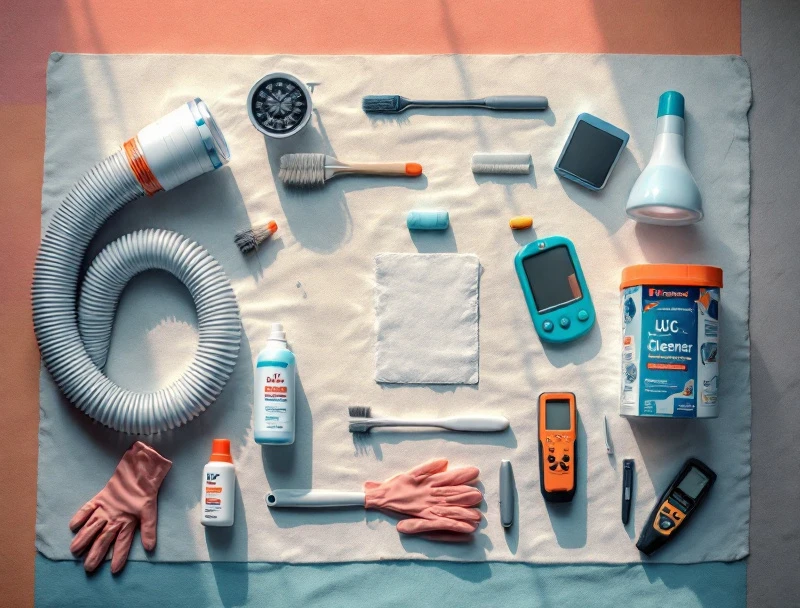
Moisture log, photographs, and source identification prepared in adjuster-ready format.
Post-remediation verification arranged through a separate Florida-licensed assessor.
Same- or next-day on-site response across Hialeah ZIP zones and inner Miami-Dade.
Written scope of work that maps to IICRC S520 Condition language before any demolition.
Distribution risk
Every other mold source — a bathroom wall, an attic sheathing zone, a flooded floor cavity — contaminates the air in its immediate vicinity. The mold grows, the spores become airborne, and the affected zone shows elevated spore counts relative to adjacent unaffected areas. Occupants in unaffected rooms are largely protected by distance and air movement patterns.
An HVAC system with active mold eliminates that protection. The air handler draws return air from the entire conditioned space, passes it across the contaminated evaporator coil at 400 to 600 cubic feet per minute, and distributes the resulting spore-laden supply air to every room in the zone simultaneously. A single Stachybotrys colony on the evaporator coil face of a 3-ton central air system distributes spores to every bedroom, living area, and bathroom in a 1,500-square-foot home on every cooling cycle — all day, every day, throughout Hialeah's 9-month cooling season.
The evaporator coil accumulates mold because it operates as a combination of the three conditions mold requires: a persistently wet surface (condensation), an organic nutrient substrate (airborne debris deposited on the wet fins), and a temperature that favors mold metabolism (40 to 55 degrees Fahrenheit on the coil surface, rising to room temperature between cycles). No other surface in a typical Hialeah home maintains all three conditions simultaneously for nine months per year.
The drain pan failure that elevates this risk to confirmed contamination is often gradual. A partial drain blockage does not immediately cause overflow — it first reduces the drain rate, extending the time that condensate pools in the pan before draining. The pan stays wetter for longer between drain cycles. The standing water level rises over weeks or months until the overflow threshold is reached and visible staining appears. By the time visible overflow symptoms appear at the air handler cabinet or ceiling below, the pan has typically been maintaining standing water for 30 to 90 days — sufficient for Stachybotrys to colonize the liner material inside the cabinet.
When HVAC investigation and downstream air sampling confirm elevated mold in a specific zone, and the clinical context warrants it — a physician-referred health complaint, a tenant exposure claim, or a legal dispute — a mycotoxin lab panel from surface wipe samples collected inside the air handler cabinet may be ordered alongside the remediation scope to document secondary metabolite exposure from the HVAC source.
Standards framework
The two standards that govern HVAC mold remediation work in Hialeah are NADCA ACR 2021 and IICRC S520. They are complementary, not competing — NADCA ACR 2021 defines the mechanical cleaning protocol for the duct system and air handler components, while IICRC S520 Level V defines the containment, PPE, and clearance requirements when confirmed mold contamination is present in the HVAC system. Applying the correct standard to the right scope is the difference between an effective remediation and a cleaned-but-not-remediated system.
| Factor | NADCA Standard Cleaning | IICRC S520 Level V Remediation | Level V + Stachybotrys Containment |
|---|---|---|---|
| Indication | Accumulated dust and debris — no confirmed mold growth | Confirmed mold growth in duct or air handler components | Confirmed Stachybotrys or Level III+ source feeding HVAC |
| Scope | Contact-vacuum and brush cleaning per NADCA ACR 2021 | HEPA vacuum + antimicrobial treatment + source correction | Full containment + HEPA + physical removal + antimicrobial |
| Coil service | Chemical cleaning per NADCA ACR 2021 | HEPA vacuum + chemical + drain pan replacement if needed | HEPA vacuum + chemical + coil replacement if colonization severe |
| Air handling | System may run during duct cleaning phase | System off, supply registers sealed during treatment | System off, full room containment per IICRC S520 Level V |
| Minimum PPE | Standard work gear per NADCA ACR 2021 | N95 respirator + disposable gloves | Half-face P100 + Tyvek suit |
| Post-clearance test | Downstream air sampling recommended | Required — indoor vs. outdoor baseline comparison | Required — independent Florida-licensed assessor |
| Typical range | $500–$1,500 | $1,500–$5,000 | $3,000–$12,000+ |
The correct scope determination requires downstream air sampling before work begins. Without pre-remediation samples from the supply registers, there is no baseline against which to measure the remediation result, and the decision to apply standard cleaning versus Level V protocol is based on visual inspection alone — which underestimates contamination in the majority of cases where coil growth is not visible from the access panel.
When confirmed Stachybotrys is found in the HVAC system — on the coil, drain pan liner, or duct surfaces — the scope escalates to the same Level III or Level V containment framework used for any other Stachybotrys finding. The toxic-mold removal protocol applies to the HVAC system just as it does to structural surfaces — full-face P100 respirator, Tyvek suit, and containment before cabinet opening, with independent clearance testing by a licensed assessor after remediation.
Hialeah local context
Hialeah's HVAC inventory spans four decades of residential equipment — from 1980s-vintage R-22 split systems with oversized cooling capacity for original construction to 2010s high-SEER variable-speed units in renovated apartments — and each equipment era has characteristic mold failure modes driven by the combination of Hialeah's climate and the equipment design of the period.
Mini-split adoption accelerated in Hialeah apartments and condominiums built or renovated after 2000, and in older units where central duct systems were deteriorated beyond practical repair. Mini-splits eliminate the ductwork mold risk but concentrate the coil and blower mold risk in a single indoor unit that is exposed to room air without the protection of even a basic filter. Hialeah's coastal air carries higher concentrations of salt aerosol and organic particulates than inland Florida — mini-split coil fins corrode faster, and the blower wheel accumulates biofilm more rapidly, than the same equipment installed in a drier or inland environment.
Attic-located air handlers — common in Hialeah's single-story slab-on-grade construction — face additional mold risk from the attic environment. An attic that reaches 130 degrees Fahrenheit during summer days contains air with high absolute humidity, even though relative humidity at that temperature is low. When the attic air cools at night or when the air handler draws attic air through an unsealed return connection, the high-humidity air cools across the evaporator coil surface and the drain pan receives a larger condensate load than the equipment was designed for at the installation air-flow conditions.
Whole-home mold remediation projects in Hialeah that include structural sources (wall cavities, attic sheathing, bathroom substrates) should always include HVAC downstream air sampling as part of the pre-remediation assessment — because a contaminated HVAC system will redistribute spores from the remediated structural sources to all rooms after the structural work is complete, producing elevated post-remediation air counts even though the structural source has been effectively treated. Coordinating the HVAC scope with the structural scope in a single project avoids this outcome.
Get started
Tell us what you have — a musty odor when the AC runs, a confirmed air test result, a drain pan overflow, or visible growth in the air handler cabinet. Include the equipment type (central system, mini-split, or both), approximate system age, and your ZIP code. Call directly at (305) 655-3290 for scheduling.
60-second form. We call you back.
We respond during business hours, usually within an hour.
Frequently asked questions
Mold enters and colonizes an AC system through the combination of a persistently wet surface, airborne organic debris, and inadequate drain pan maintenance. The evaporator coil surface runs at 40 to 55 degrees Fahrenheit during operation, producing condensation that drips into the drain pan. Airborne dust, skin cells, and fiber debris accumulate on the wet coil fins, providing the nutrient base mold requires. If the condensate drain line is slow or blocked, standing water in the drain pan maintains the wet environment even when the system is off. Systems that are oversized for the space short-cycle — running briefly and shutting off before dehumidifying — and leave the coil surface wet for extended off-cycle periods. These conditions are present year-round in Hialeah due to the climate, making regular coil and drain service more important here than in drier climates.
An HVAC system with active mold growth delivers elevated spore concentrations directly to every room in the conditioned space — it converts a localized mold source into a whole-home exposure event. Standard mold species in HVAC systems (Penicillium, Aspergillus, Cladosporium) at elevated airborne concentrations can trigger respiratory symptoms, allergic reactions, and asthma exacerbations in sensitive occupants. Stachybotrys confirmed in an HVAC system is a more serious finding — the air handler distributes spores and secondary metabolites to all conditioned zones, not just the room where the physical source is located. Occupant health complaints concentrated in rooms served by a specific air handler — or that improve when the system is turned off — are a reliable indicator that the HVAC system is a contributing exposure source.
Standard duct cleaning per NADCA ACR 2021 addresses accumulated dust, debris, and biological contamination using contact-vacuum and brush methods — it is a maintenance service appropriate when the system is dirty but no confirmed mold growth is present. Mold remediation addresses confirmed mold growth within the system and requires EPA-registered antimicrobial treatment in addition to mechanical cleaning, source correction, and post-remediation verification. The key distinction is whether confirmed mold growth has been identified: cleaning is maintenance; remediation is a response to a confirmed contamination condition. Marketing standard duct cleaning as mold remediation — or performing duct cleaning alone when the evaporator coil and drain pan are the actual mold source — is a scope error that produces a cleaned duct system with an untreated active source.
NADCA ACR 2021 (Assessment, Cleaning, and Restoration of HVAC Systems) requires that all HVAC system components in contact with the airstream be cleaned using source-removal methods — contact vacuum and agitation — rather than spray-and-wipe surface cleaning alone. For mold remediation specifically, NADCA ACR 2021 requires that contaminated components be treated with EPA-registered antimicrobials after mechanical cleaning, that the evaporator coil and drain pan receive full service, and that the completed work be verified by post-cleaning inspection. NADCA-certified contractors must follow ACR 2021 protocols and documentation requirements. IICRC S520 Level V supplements NADCA ACR 2021 for confirmed Stachybotrys findings, adding containment requirements and the independent clearance testing mandate under Florida Statute Chapter 468.
IICRC S520 Level V is the highest containment level in the mold remediation framework — it applies when confirmed mold contamination is located within the HVAC system itself, specifically where the air handler serves as a distribution mechanism for contaminated air. Level V adds full room-level containment with HEPA air scrubbers at negative pressure before the air handler cabinet is opened, because the air handler is a spore amplification and distribution system. Any disturbance of the interior without containment disperses the colony load into the occupied space at a concentration that far exceeds what disturbance of a surface mold source would produce. Level V applies automatically when Stachybotrys is confirmed anywhere in the HVAC system — coil, drain pan, liner, or duct surfaces.
No — duct cleaning alone does not fix HVAC mold because the ductwork is rarely the primary source; the evaporator coil and drain pan are. Mold grows on the evaporator coil where moisture and organic debris accumulate on the fin surface; the duct system downstream is contaminated by spores and fragments distributed from the coil source. Cleaning the ductwork without treating the coil removes the downstream contamination but leaves the active source intact. Within weeks of duct cleaning, the coil source re-contaminates the downstream duct surfaces at the same rate as before. A complete HVAC mold scope requires coil treatment, drain pan service, and duct cleaning in sequence — with the coil and drain pan treated first, before the duct system is addressed.
The most reliable indicator is a musty or earthy odor that appears specifically when the HVAC system activates — the odor is present in the air stream but not in the room when the system is off. Visible dark growth on the supply register grille face, condensate overflow staining around the air handler cabinet, and water stains on the ceiling below an attic-located air handler are visible indicators. Air sampling from supply registers with the system running provides quantitative confirmation — elevated spore counts relative to outdoor baseline, or genera atypical for outdoor air in the specific zone, indicate HVAC-source contamination. A coil inspection camera documents conditions at the coil face and drain pan without requiring full system disassembly.
Mini-split indoor units develop mold primarily on the blower wheel — the squirrel-cage fan that draws room air through the evaporator coil — because the blower wheel stays damp between cycles and accumulates a biofilm layer that progresses to visible mold within 2 to 4 years of typical use. Hialeah apartments and condominiums that use mini-splits in bathrooms and kitchens are particularly vulnerable, because these rooms introduce concentrated humid air to the mini-split return at every shower and cooking event. The mini-split cabinet is not sealed like a ducted air handler, so room air with high humidity, cooking particles, and bathroom vapor circulates directly through the coil and blower without filtration. Most mini-split manufacturers recommend annual cleaning but few residents schedule it, allowing biofilm and mold to accumulate to the point where the musty discharge odor is the first symptom.
An evaporator coil treatment and drain pan service — the most common HVAC mold scope — is typically completed in half a day to one full day. Adding air handler cabinet liner replacement adds 2 to 4 hours. A full NADCA ACR duct cleaning scope for a typical Hialeah single-story home takes 1 to 2 days. A full IICRC S520 Level V project with containment, coil treatment, liner replacement, and duct cleaning typically takes 2 to 4 days of active work, plus 24 to 72 hours for clearance sample results. The HVAC system is non-operational during active remediation and is not returned to service until post-remediation clearance sampling confirms acceptable spore levels in the supply air stream.
UV-C germicidal lamps installed at the evaporator coil surface are effective at reducing surface mold colonization on the coil face — they do not clean existing mold from a contaminated system and do not replace coil maintenance or drain pan service. UV-C lamps must be positioned to maintain line-of-sight to the coil face and must have sufficient intensity (typically 35 to 100 microwatts per square centimeter at the coil surface) to deliver germicidal dose to mold cells. Lamps degrade in UV output over time — most residential UV-C lamps should be replaced annually. UV-C is a useful post-remediation suppression tool for systems that have been returned to clean condition; it is not a substitute for the mechanical cleaning and chemical treatment required to address an active mold colonization.
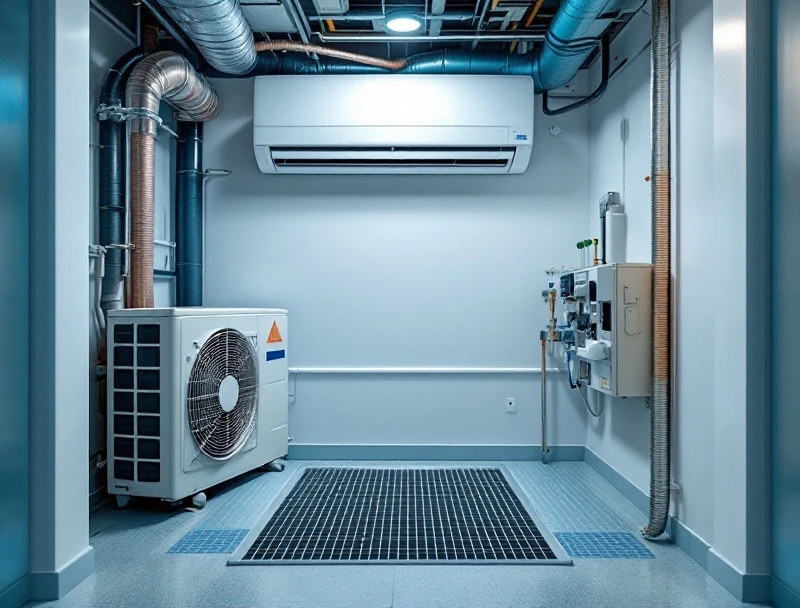
NADCA ACR 2021 duct remediation and IICRC S520 Level V coil treatment — with downstream clearance sampling that confirms the result. Call (305) 655-3290.