
Works to IICRC S520
Every project follows the IICRC S520 reference for professional mold remediation.
Florida Mold-Services Framework IICRC S520 Reference
(305) 655-3290 Hablamos Español
Hialeah · Stachybotrys Removal
Confirmed Stachybotrys chartarum removal under IICRC S520 Level III full containment — physical substrate removal, HEPA air scrubbing, negative-pressure isolation, and independent clearance testing for Hialeah homes. Bleach does not remediate black mold.
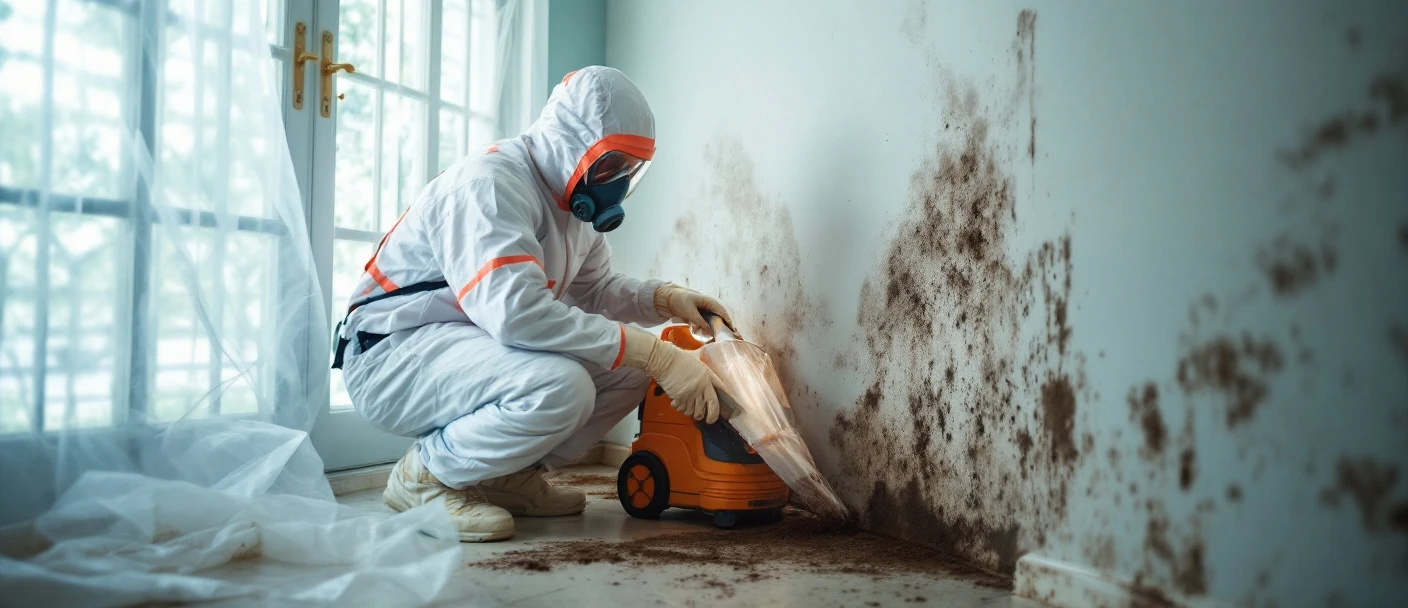
Stachybotrys chartarum — the species behind the colloquial label black mold — does not respond to surface bleaching, encapsulant painting, or air treatment alone. It colonizes paper-faced drywall, wood framing, ceiling tile, and insulation backing when those materials remain wet for 48 to 72 hours or more, and its mycelial network penetrates into the substrate in a way that makes surface treatment ineffective. The IICRC S520 Standard for Professional Mold Remediation is explicit: confirmed Stachybotrys in porous building materials requires physical removal under Level III or higher containment. Every confirmed Stachybotrys project we perform in Hialeah follows that framework — full containment, HEPA isolation, physical material removal, structural drying verification, and independent clearance testing by a licensed assessor who has no financial relationship with our remediation work.
How it works
Stachybotrys remediation is not a one-step treatment — it is a five-phase project that begins before any physical work starts (species confirmation and moisture source identification) and does not end until an independent licensed assessor issues a passing clearance report. Each phase has defined requirements that protect both the property and the occupants.
When Stachybotrys chartarum is suspected — visible black gelatinous growth, a confirmed air sample result, or an ERMI detection — the first priority is identifying and stopping the active moisture source. Continuing to remediate against an ongoing leak, condensate overflow, or roof penetration produces immediate recurrence. The intake establishes which materials are affected, whether the HVAC system has been used as a spore-distribution pathway, how long the moisture condition has existed, and whether structural drying will be required alongside remediation. It also determines whether temporary occupant relocation is indicated during active containment work.
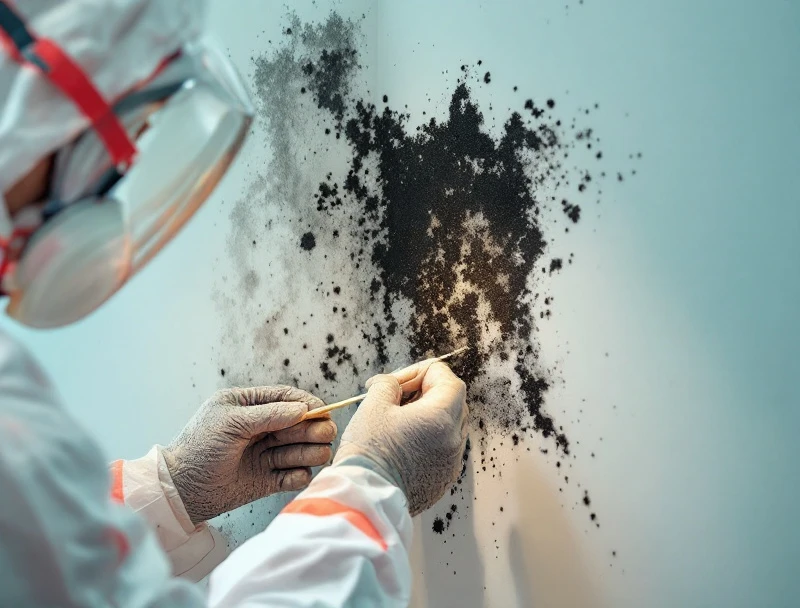
Visual appearance alone cannot confirm Stachybotrys chartarum. Multiple mold species produce macroscopic dark growth — Cladosporium, Alternaria, Nigrospora, and pen-marked gypsum staining can all appear visually similar. Surface tape-lift or bulk material samples submitted to an AIHA-accredited laboratory provide species-level confirmation before the remediation protocol and containment level are finalized. Confirming Stachybotrys triggers a minimum Level III containment protocol under IICRC S520 regardless of the affected area size. A simultaneous pre-remediation air sample also establishes the baseline for post-remediation clearance comparison.
Confirmed Stachybotrys contamination requires full Level III containment — floor-to-ceiling 6-mil poly sheeting forming a complete enclosure around the work area, sealed at all penetrations including electrical boxes, pipe chases, and door frames, with a single zipper-door entry point. HVAC supply and return diffusers inside the containment zone are sealed. HEPA air scrubbers are installed and running before any disturbing work begins, establishing negative pressure within the containment zone relative to adjacent occupied space. The pressure differential ensures that any air movement through gaps flows from the occupied space into containment, not outward.
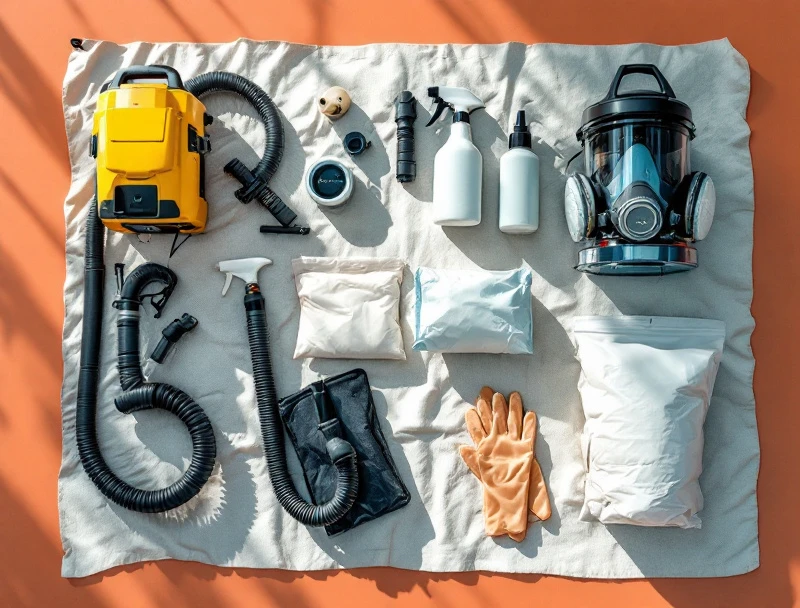
Stachybotrys-affected porous materials are physically removed — drywall panels, insulation batts, wood framing where structurally practical, ceiling tile, and paper-faced duct liner. Materials are double-bagged in poly inside the containment zone and removed through the zipper door only. Remaining structural surfaces are HEPA-vacuumed first to remove the bulk settled spore load, then treated with an EPA-registered antimicrobial. Wood framing that cannot be removed is wire-brushed or surface-planed to remove the mycelial layer and sealed with an encapsulant. HEPA vacuuming always precedes antimicrobial application — treating before vacuuming embeds disturbed spores into the treatment and reduces effectiveness.
After physical removal and antimicrobial application, structural drying verification confirms that remaining building materials have returned to acceptable moisture content ranges before new materials are installed. Wood framing must be below 19% MC; drywall substrates below 15% MC. After drying confirmation, the containment zone receives a final HEPA scrubber pass running for a minimum of 4 air changes at confirmed negative pressure. A Florida-licensed mold assessor who is independent of the remediation contractor then collects post-remediation clearance air samples inside the former containment zone and simultaneously outside. The independent assessor issues a written clearance report; the contractor delivers a completion package including disposal records, pre- and post-remediation air sample data, and structural drying logs.
Remediation scope
Stachybotrys remediation involves eight sequential work components, from the statutory pre-remediation assessment through independent post-remediation clearance. Each step is defined by the IICRC S520 framework and Florida Chapter 468 licensing requirements. Understanding the full scope prevents property owners from accepting partial-scope proposals that leave critical steps out of the project.
HEPA air scrubbers capturing 99.97% of particles at 0.3 microns run continuously from containment establishment through final clearance preparation. The containment air volume is turned over a minimum of 4 times per hour. Stachybotrys spores range from 3 to 40 microns — well above the 0.3-micron HEPA threshold — meaning HEPA scrubbing captures essentially the entire disturbed spore load within the zone. Exhaust from HEPA units is directed to the building exterior where possible to reinforce negative pressure and prevent recirculation.
Physical removal is the only IICRC S520-compliant treatment for Stachybotrys in porous building materials. Drywall panels with confirmed contamination are removed back to the nearest structural member. Insulation batts, ceiling tile, and paper-faced duct liner are bagged and removed. Affected wood framing is addressed in place when full removal is not structurally practical — HEPA vacuumed, surface-planed or wire-brushed to remove the mycelial layer, then sealed with an encapsulant. All removed materials are double-bagged inside the containment zone and weight-tracked for disposal documentation.
After physical removal and HEPA vacuuming, exposed structural surfaces receive treatment with an EPA-registered antimicrobial appropriate for the substrate. Porous substrates remaining in the structural assembly that showed Stachybotrys contamination or adjacent moisture damage receive an encapsulant coat that physically seals residual spores within the substrate matrix following antimicrobial treatment. Encapsulant application is documented with photographs before new drywall or insulation is installed, providing a visual baseline for the replacement scope.
Structural drying verification confirms that remaining building materials have returned to acceptable moisture content ranges before new materials are installed. Wood framing below 19% MC and drywall substrates below 15% MC are the typical thresholds. Concrete block moisture content is verified using non-invasive capacitance meters calibrated for masonry. Commercial dehumidification equipment may run inside the sealed containment for 24 to 72 hours after active remediation. Installing new drywall over materials above threshold recreates the moisture conditions that allowed Stachybotrys to colonize in the first place.
Florida Statute Chapter 468 requires that post-remediation clearance sampling be conducted by a licensed mold assessor independent of the remediation contractor. Clearance air samples collected inside the former containment zone and simultaneously outside are submitted to an AIHA-accredited laboratory. The clearance standard for confirmed Stachybotrys is zero detectable indoor Stachybotrys when the simultaneous outdoor baseline is also zero — because Stachybotrys is not a native outdoor genus in South Florida. The independent assessor issues a written clearance report completing the documentation package.
In Hialeah homes, Stachybotrys growth behind bathroom shower walls and in ceiling cavities above wet-area ceilings is among the most common confirmed-species findings — see our dedicated bathroom mold service for the specific protocol covering tile removal, drywall replacement, and moisture-barrier installation in Hialeah bath and shower areas. When the HVAC system has been operating as a spore distribution pathway from a Stachybotrys source, the project scope expands to include ductwork remediation under NADCA ACR 2021 alongside S520 containment work — distributing spores through the duct system cross-contaminates the entire conditioned space.
Hialeah cost reference
Stachybotrys removal costs range from approximately $500 for a very small isolated finding to $25,000 or more for whole-home or HVAC-distributed contamination requiring Level IV scope with structural drying. The twelve scenarios below reflect current Hialeah market ranges. Total project cost includes pre-remediation assessment, active remediation, structural drying where required, and independent clearance testing — all three components are statutory requirements for confirmed Stachybotrys in Florida.
Small isolated Stachybotrys (under 10 sf on drywall) — Level I/II scope
Bathroom ceiling or wall Stachybotrys — Level III, drywall removal
Single-room Level III containment, drywall removal, and clearance
Multi-room Level III (bedroom + adjacent hall, closet, or bathroom)
Large-area or multi-room Level IV scope with structural drying
Whole-home Level IV+ or HVAC-distributed Stachybotrys scope
Pre-remediation species confirmation sampling (tape-lift + ERMI)
Post-remediation independent clearance air sampling package
Air handler or evaporator-coil Stachybotrys — Level V HVAC scope
Attic sheathing Stachybotrys — small section (under 200 sf)
Emergency water intrusion response + moisture source mitigation
Commercial dehumidification structural drying package (48–72 hrs)
Single-room Level III + clearance
Most common Stachybotrys scope in Hialeah
Independent clearance sampling
Separate from remediation — required by statute
Drywall colonization window
Sustained water contact before Stachybotrys establishes
Coverage map
We serve all seven Hialeah ZIP codes and adjacent Miami-Dade communities for Stachybotrys assessment, remediation, and clearance coordination. Confirmed Stachybotrys projects and post-storm emergency response are prioritized — call directly at (305) 655-3290 for urgent scheduling.
Why us
Every project follows the IICRC S520 reference for professional mold remediation.
Aligned with Florida's Chapter 468 Part XVI mold-services framework, including the assessor-remediator separation rule.
HVAC work follows the NADCA ACR 2021 protocol — coil, drain pan, plenum, ductwork, and air handler in scope.
Post-remediation verification is arranged through a separate Florida-licensed mold assessor.
Post-storm and water-damage workflows refined across South Florida hurricane seasons.
Scope-based estimates with cost ranges before any demolition begins.
Moisture log, photographs, and source identification prepared in adjuster-ready format.
Post-remediation verification arranged through a separate Florida-licensed assessor.
Same- or next-day on-site response across Hialeah ZIP zones and inner Miami-Dade.
Written scope of work that maps to IICRC S520 Condition language before any demolition.
The bleach myth
Bleach — sodium hypochlorite in water — is an effective surface disinfectant on non-porous materials. On sealed tile, glass, and metal, it kills surface mold cells on contact. On porous materials — drywall, wood framing, concrete block, and grout — its effectiveness stops at the surface layer. The water carrier in bleach is absorbed into the porous substrate, but the active hypochlorite ion is too large to penetrate deeply. What reaches the interior of the material is water — which feeds the colony rather than killing it.
The visible result of bleaching Stachybotrys on drywall is whitening of the surface discoloration. The hyphal network (the root-like structures that penetrate into the paper facing and gypsum core) is largely unaffected. Within two to six weeks of bleach treatment and repainting, the colony resumes visible surface growth from the intact subsurface network. The property owner repeats the bleach treatment, observes temporary whitening, and interprets temporary whitening as effective treatment. The cycle continues while the structural damage to the drywall substrate progresses and the occupant exposure continues.
The IICRC S520 framework does not list bleach as a primary treatment agent for any containment level. The standard specifies: HEPA vacuuming to remove bulk spore load, EPA-registered antimicrobial application to treat residual surface contamination on non-porous structural members, and physical removal of porous materials with confirmed contamination. An antimicrobial is not a remediation agent for porous materials — it is a surface treatment applied to the structural members that remain after contaminated porous materials have been removed.
When surface sampling or ERMI analysis confirms Stachybotrys, the next step is species-specific laboratory analysis to determine whether mycotoxin lab panels are appropriate — particularly in health-complaint investigations where a physician or environmental medicine specialist has requested documentation of secondary metabolite exposure alongside the structural remediation scope.
IICRC S520 framework
The IICRC S520 defines five containment levels based on affected area size, the distribution of contamination, the presence of specific high-concern genera, and the proximity of the work area to occupied space. Understanding which level applies to a given project is the primary output of the pre-remediation assessment — and getting it wrong in either direction has significant consequences.
Under-scoping — applying Level I or II protocol to a situation that requires Level III — risks cross-contamination of adjacent rooms during demolition and produces a clearance result that does not reflect the actual post-remediation condition. Over-scoping — applying Level IV to a situation that qualifies for Level III — adds cost without measurably improving the outcome. The assessment determines the level; the level determines the containment, PPE, clearance, and documentation requirements.
| Factor | Level I & II | Level III | Level IV / V |
|---|---|---|---|
| Affected area | Under 30 sf — isolated single surface | 30–100 sf or spread to multiple surfaces | Over 100 sf or any confirmed Stachybotrys |
| Containment type | Local poly barrier, taped perimeter | Floor-to-ceiling poly, zipper-door entry | Full pressure-differential enclosure, no bypass |
| HVAC handling | Seal diffusers in zone, system off | Seal all diffusers, run HEPA scrubbers | Negative-air machines, continuous HEPA, no recirculation |
| Minimum PPE | N95 respirator, disposable gloves | Half-face P100, full Tyvek suit | Full-face P100, Tyvek, shoe covers, decon sequence |
| Material treatment | HEPA vacuum + surface antimicrobial | Physical removal + double-bag inside containment | Airlocked poly removal, double-bag before exiting |
| Clearance required | Visual pass acceptable | Air sampling — indoor vs. outdoor baseline | Independent licensed assessor required by statute |
| Typical range | $300–$2,000 | $1,500–$7,000 | $5,000–$25,000+ |
The key trigger for Level III that differs from Level I and II is species confirmation. Under S520 guidelines, confirmed Stachybotrys chartarum — regardless of area size — automatically elevates the project to Level III minimum. A 5-square-foot confirmed Stachybotrys finding on a bathroom ceiling requires Level III full containment; a 50-square-foot Cladosporium finding in an attic may qualify for Level I or II depending on location and distribution. The species confirmation sampling step (Step 2 in our process) is specifically designed to make this determination before containment construction and demolition work begin.
Level V is reserved for confirmed Stachybotrys contamination within the HVAC system — specifically in the air handler, evaporator coil, drain pan, or duct liner — where the distribution mechanism is the HVAC system itself. Level V adds a complete HVAC system remediation protocol under NADCA ACR 2021 alongside the S520 containment requirements. The underlying principle is that mold remediation of the source structure without addressing the HVAC distribution system leaves a contamination pathway intact that will recontaminate the remediated areas.
Hialeah local context
Hialeah's building stock, climate, and infrastructure create a specific set of conditions that make Stachybotrys colonization more likely than in drier climates or newer construction. Understanding the local risk profile helps property owners recognize the high-risk conditions and address them before the sustained moisture event that enables Stachybotrys to establish.
Air conditioning system failures are the other primary Stachybotrys trigger in Hialeah residential settings. Condensate drain line blockage — common in South Florida's high-humidity operating season from April through October — overflows the secondary drain pan into the ceiling plenum or wall chase. A single blocked drain event that goes undetected for 48 to 72 hours is sufficient to initiate Stachybotrys colonization on wet drywall directly below the air handler. In multi-story buildings and condominium units, the overflow from an upper-unit air handler affects the ceiling of the unit below — creating Stachybotrys conditions in a space where neither the occupant nor the building owner is immediately aware of the source.
Hialeah's apartment and condominium construction from the 1970s through the 1990s frequently used paper-backed ceiling tile systems in corridor and common areas alongside drywall in units. Both substrates support Stachybotrys growth under sustained moisture. Ground-floor slab-on-grade units with roof drain failures at the building perimeter are the highest-risk class — the perimeter wall assembly receives moisture from both above (roof) and at the base (slab interface), creating a tall vertical column of wet cellulose material that can support extensive Stachybotrys colonization behind a painted and apparently dry interior surface.
Roof-deck and soffit failures in Hialeah frequently introduce moisture into the attic sheathing before any visible ceiling symptoms appear in the living space below. A roof-deck moisture event that penetrates to the ceiling drywall above a bedroom may produce Stachybotrys growth in the attic sheathing — directly above the drywall — well before the ceiling surface shows any staining. When attic mold is confirmed during an assessment, the scope should always include evaluation of adjacent ceiling drywall assemblies in the rooms below. See our dedicated attic sheathing remediation service for the protocol covering roof-deck ventilation correction alongside sheathing treatment — both are required to prevent recurrence in Hialeah's heat and humidity.
Get started
Tell us what you have — visible black growth, a confirmed air or ERMI result, or a suspected moisture event with drywall exposure. Include the affected room, how long the moisture event lasted, and your ZIP code. For confirmed Stachybotrys and post-storm emergency response, call directly at (305) 655-3290.
60-second form. We call you back.
We respond during business hours, usually within an hour.
Frequently asked questions
Stachybotrys chartarum is a mold species that appears as dark greenish-black or olive-black gelatinous growth on chronically wet cellulose materials — paper-faced drywall, ceiling tile, wood pulp fiberboard, and wood framing. The colloquial term black mold refers to its macroscopic appearance, but the label is widely misused — hundreds of mold species produce visually dark colonies on building surfaces. Stachybotrys is only confirmed by surface tape-lift, bulk material analysis, or ERMI qPCR at an AIHA-accredited laboratory. Visual inspection alone is never sufficient for species confirmation, and the entire remediation protocol and containment level change depending on whether Stachybotrys is confirmed or merely suspected.
Bleach kills surface mold cells on non-porous materials — sealed tile, glass, metal — but does not penetrate porous substrates, and the IICRC S520 is explicit that bleach is not an appropriate treatment for Stachybotrys in porous building materials. On drywall, bleach whitens the visible surface while leaving the hyphal network intact within the paper facing and gypsum core. The colony typically resumes visible growth within weeks. Applying bleach and repainting delays proper remediation, reduces visible warning signs, and allows contamination to continue behind finished surfaces. The only IICRC-compliant treatment for Stachybotrys in porous materials is physical removal under containment.
Confirmed Stachybotrys chartarum — regardless of area size — triggers a minimum of Level III full containment under IICRC S520 guidelines. Level III requires floor-to-ceiling poly barrier construction, a zipper-door entry, sealed HVAC diffusers, and HEPA air scrubbers establishing negative pressure before work begins. When the affected area exceeds 100 square feet or the HVAC system has distributed spores to other areas, Level IV or Level V containment with continuous negative-air machines is required. Level III and above mandates clearance air sampling by an independent licensed assessor before the containment is permanently removed — visual pass alone is not sufficient.
Yes — under Florida Statute Chapter 468, Part XVI, the mold assessment and mold remediation must be performed by separately licensed professionals, and the same contractor cannot perform both services on the same project. The licensed assessor produces a written assessment report and remediation protocol before any work begins. This statutory separation prevents conflicts of interest and ensures that the scope of work is defined independently of the entity performing it. Following remediation, the same assessor must conduct post-remediation verification testing independently of the remediation contractor. Operating outside this framework creates liability exposure for the property owner and may invalidate insurance claims that rely on the remediation documentation.
For Level III and above containment — required for confirmed Stachybotrys — temporary relocation during active remediation is strongly recommended. The containment maintains negative pressure which reduces cross-contamination risk, but elevated airborne spore counts adjacent to the containment can occur during personnel entry and exit sequences. For single-room Level III projects, relocating occupants from the affected wing is typical. For multi-room Level IV scopes, full temporary relocation during active work is standard practice. Your contractor should provide written occupancy guidance as part of the remediation protocol before work begins — not as an afterthought during demolition.
Total project duration from pre-remediation assessment to final clearance documentation is typically 10 to 21 days depending on scope, structural drying requirements, and laboratory turnaround time. Active remediation for a single-room Level III project typically takes 2 to 4 days. Structural drying verification adds 24 to 72 hours. Post-remediation clearance sampling turnaround from an AIHA-accredited lab is 24 to 72 hours for standard processing. A small isolated scope under 30 sf — where Stachybotrys is not confirmed and Level I/II applies — can be completed in 1 to 2 days with clearance results within 3 to 5 days total.
Clearance air sampling for confirmed Stachybotrys is collected by a Florida-licensed mold assessor — independent of the remediation contractor — after the final HEPA scrubber pass and before permanent containment removal. Samples are collected inside the former containment zone and simultaneously outside. The clearance standard for Stachybotrys is zero detectable indoor count when the simultaneous outdoor baseline is also zero — because Stachybotrys is not a common outdoor genus in South Florida. Any detectable indoor Stachybotrys against a zero outdoor baseline requires re-remediation before clearance is granted. The assessor issues a written clearance report; the contractor provides disposal and drying documentation to complete the project package.
Stachybotrys requires two conditions to colonize: a cellulose substrate (paper-faced drywall, wood framing, ceiling tile) and sustained moisture contact for 48 to 72 hours or more — conditions present in Hialeah after roof penetrations, plumbing leaks, and AC condensate overflow. Hialeah's flat and low-slope roof systems, aging AC condensate drain lines, and hurricane exposure create the sustained moisture events Stachybotrys requires. Homes built between 1960 and 1985 with paper-faced drywall ceiling systems are the highest-risk class. AC drain-pan overflow in apartments and condominiums is a common Stachybotrys trigger — particularly when overflow into wall cavities or ceiling chases goes undetected for days before visible symptoms appear at the ceiling surface.
Standard mold remediation covers all species at any confirmed containment level — black mold removal is the subset where Stachybotrys chartarum has been confirmed and Level III or higher containment is mandated. The primary differences are: full containment versus local containment; mandatory independent clearance testing before breaking containment; full-face or half-face P100 respiratory protection rather than N95; physical material removal as the only compliant treatment for affected porous materials; and the statutory requirement for a pre-remediation written assessment and an independent post-remediation clearance. The project documentation package for confirmed Stachybotrys is substantially more extensive than for a standard Level I or II scope.
The definitive confirmation is a passing clearance air test — zero Stachybotrys detected inside the former containment zone when the simultaneous outdoor baseline is also zero, conducted by a licensed independent assessor. Beyond the air test, passing clearance requires no visible mold growth on any exposed surface, moisture content of structural materials within acceptable ranges (wood below 19% MC, substrates below 15% MC), and no elevated readings on post-clearance moisture mapping of adjacent wall cavities or ceiling plenum. The complete documentation package — original assessment report, remediation protocol, disposal records, drying logs, and independent clearance report — constitutes the record of successful remediation for insurance, real estate, and legal purposes.
Stachybotrys chartarum requires full containment, physical removal, and independent clearance — not bleach. IICRC S520-reference work with documented chain of custody.