
Works to IICRC S520
Every project follows the IICRC S520 reference for professional mold remediation.
Florida Mold-Services Framework IICRC S520 Reference
(305) 655-3290 Hablamos Español
Hialeah · Lab Testing
Air sampling, surface analysis, ERMI, HERTSMI-2, and mycotoxin lab panels for Hialeah homes — all samples processed by AIHA-accredited independent laboratories with professional interpretation and chain-of-custody documentation.
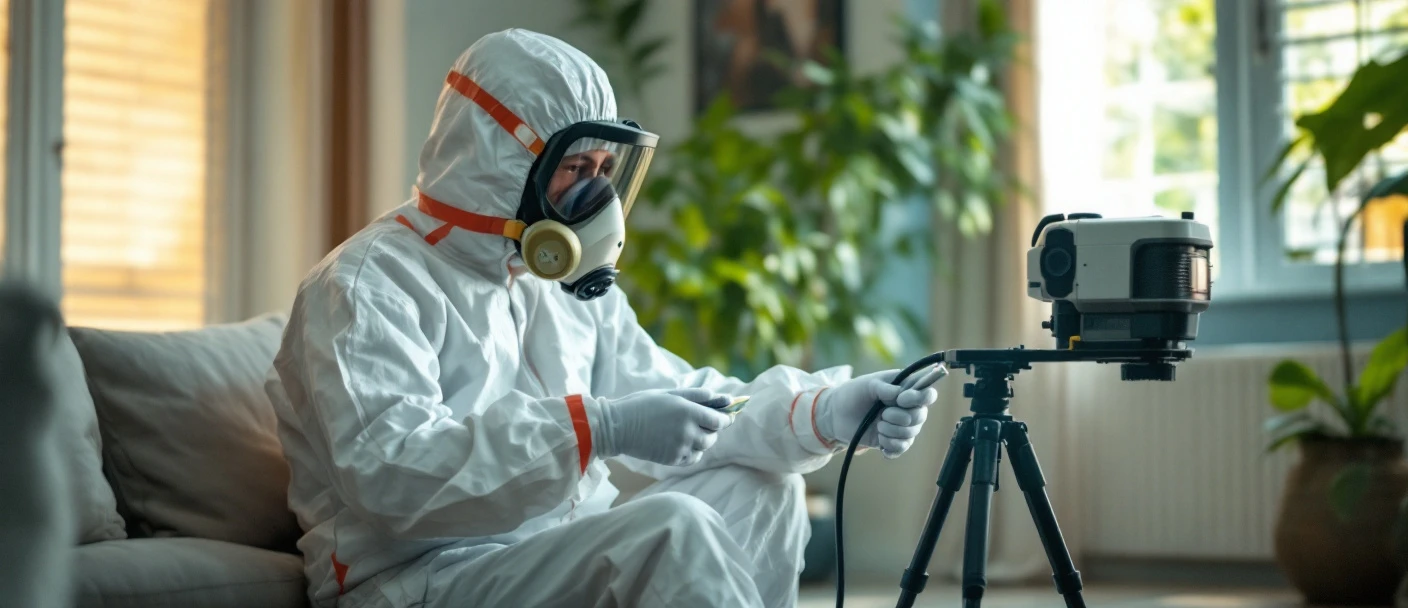
Mold testing and mold inspection are not the same service — and neither replaces the other. An inspection locates where mold conditions exist through visual survey, moisture mapping, and thermal imaging. Testing quantifies what species are present and at what concentrations, using calibrated collection equipment and accredited laboratory analysis. Most situations benefit from both: the inspection directs the sampler to the right locations, and the laboratory results confirm the finding, identify the genus or species, and produce the chain-of-custody documentation that insurance adjusters, lenders, real estate attorneys, and physicians require. Every sample we collect in Hialeah is processed by an AIHA-accredited independent laboratory — never a lab affiliated with any remediation company.
How testing works
A professionally conducted mold test follows five structured steps — from selecting the right panel for the situation through receiving an interpreted results report that is actionable for remediation decisions, insurance claims, or clinical referrals. Each step has defined preparation requirements that affect the accuracy and defensibility of the results.
The first step is matching the test type to the situation. A post-storm homeowner concerned about visible mold needs a different protocol than a buyer who wants a baseline before closing, or a physician-referred patient investigating a health complaint. Air sampling, ERMI, HERTSMI-2, and mycotoxin panels each answer different questions and require different collection methods. The consultation determines which panel is appropriate, how many samples are needed, and what site-preparation is required before collection begins.
Site preparation is as important as the sampling itself. For air sampling, the HVAC system must be turned off for 30 to 60 minutes before collection begins, allowing airborne particulates to settle and reflect the local room environment rather than a recirculated-air average. Doors and windows are closed. An outdoor baseline sample is prepared simultaneously — this is the reference against which all indoor samples are compared. ERMI and HERTSMI-2 settled-dust collection requires a different protocol: the HVAC must have been running for several days before sampling, to ensure a representative settled-dust load.
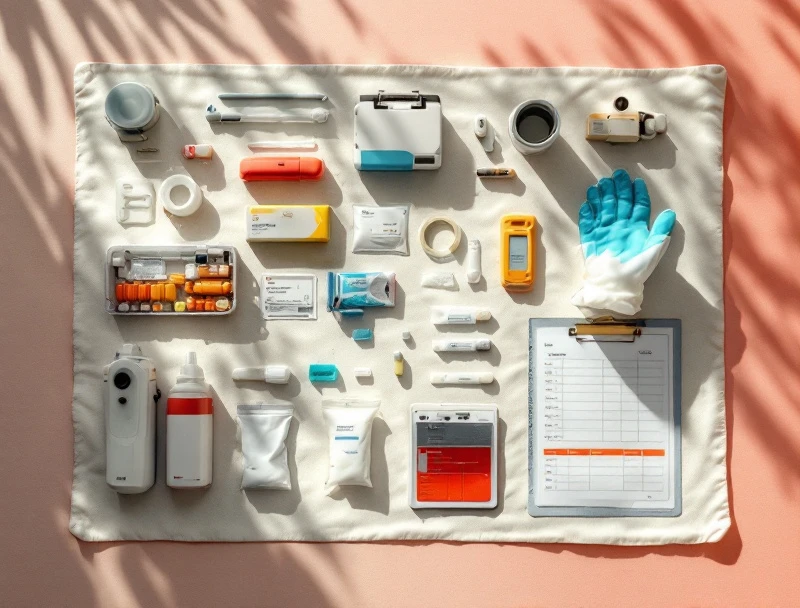
Air samples are collected using a calibrated pump that draws air through a spore trap cassette at a standardized flow rate — typically 15 liters per minute for a defined duration (usually 10 minutes, producing a 150-liter sample volume). This standardization allows direct comparison between samples and against published reference values. Surface tape-lift samples are collected with a defined contact area and transferred directly to a slide. Swab samples follow a standardized swabbing area protocol. ERMI settled-dust samples use a standardized vacuum collection from a defined floor area. Field blank cassettes travel with each lot to validate lab performance.
Every sample shipped to the laboratory travels with a chain-of-custody form documenting the collection date, time, location, collector, and sample type. The laboratory must be accredited under a recognized scheme — typically AIHA-LAP (American Industrial Hygiene Association Laboratory Accreditation Program) or EMLAP (Environmental Microbiology Laboratory Accreditation Program). Samples are processed using standardized analytical methods: optical microscopy for spore trap and surface samples, quantitative PCR (qPCR) for ERMI and HERTSMI-2, and ELISA or LC-MS for mycotoxin panels.
The laboratory returns raw counts and a summary report. A professional interpretation overlays the raw data: comparing indoor spore counts to the simultaneous outdoor baseline, flagging genera that exceed outdoor levels, identifying species of concern (Stachybotrys, Aspergillus versicolor, Chaetomium), and translating ERMI scores to published reference ranges. The interpretation report indicates whether the results support remediation, additional testing, re-testing after source correction, or a clearance determination.
Testing panels & methods
Different situations call for different testing protocols. The eight test types below cover the full range of residential and commercial mold testing scenarios encountered in Hialeah — from a quick tape-lift to confirm a visible surface stain to a full ERMI panel for a health-complaint investigation. Many projects combine two or three methods to answer complementary questions.
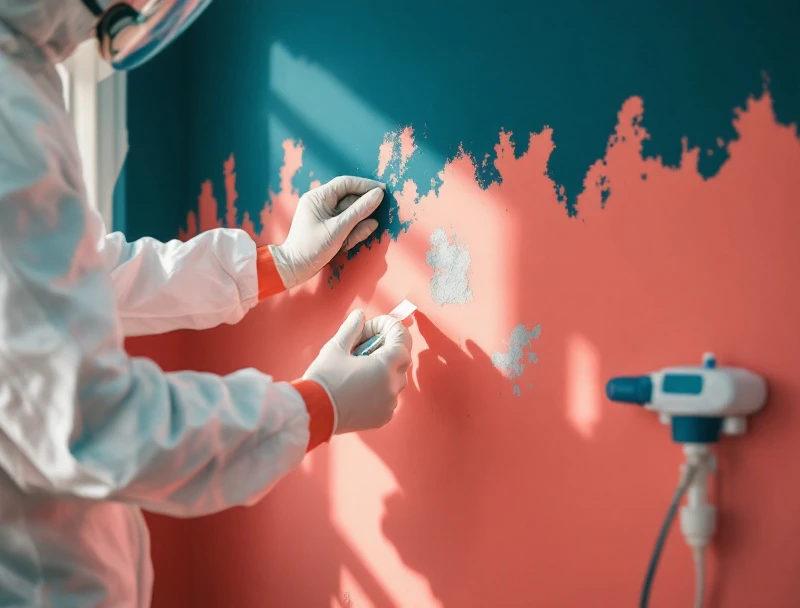
Bulk sampling sends a physical piece of suspect material — drywall, wood, insulation, ceiling tile, or dust collected from a defined area — to the laboratory for direct microscopic analysis and culture. Bulk analysis provides the most definitive confirmation of mold growth within a material, rather than on its surface, and can identify multiple species in a single sample. This method is commonly used for attic sheathing, wall cavity material exposed during demolition, and HVAC liner material. Bulk samples should be collected using gloves and sealed in clean bags to prevent cross-contamination.
ERMI analysis uses quantitative PCR (qPCR) to identify and quantify 36 mold species in a settled-dust sample collected from a standardized floor area. The result is a single numeric score comparing the home to a national reference database of approximately 1,100 American homes. ERMI scores above +5 indicate mold conditions above the national median; scores above +10 are associated with elevated exposure in published research. ERMI is more sensitive than optical microscopy for detecting Stachybotrys chartarum and Aspergillus versicolor — two species that produce mycotoxins at concentrations below the detection threshold of standard spore trap analysis.
HERTSMI-2 (Health Effects Roster of Type-Specific Formants for Mycotoxins and Inflammagens, 2nd iteration) is a five-species subset of the ERMI panel focused on the species most associated with adverse health outcomes in published research: Stachybotrys chartarum, Aspergillus versicolor, Chaetomium globosum, Wallemia sebi, and Penicillium variabile. A weighted scoring system produces a single number; scores above 11 indicate conditions that some environmental medicine practitioners consider clinically significant. HERTSMI-2 is commonly ordered in health-complaint investigations where ERMI results are borderline or where clinician-requested testing is needed.
After mold remediation is complete, clearance air sampling compares the remediated area to a simultaneous outdoor baseline to confirm that spore levels have returned to background. Under Florida law, clearance testing must be ordered and interpreted by a licensed Florida mold assessment professional who is independent of the remediation contractor. Clearance air sampling follows the same collection protocol as pre-remediation baseline sampling — the same pump calibration, the same cassette type, and a simultaneous outdoor control. Results are compared to the original pre-remediation baseline and to outdoor background levels.
When evaporator coils, drain pans, or ductwork are suspected as mold sources, downstream air sampling from a supply register directly measures the spore load being delivered to occupied space. This test is collected with the air handler running at normal fan speed. Elevated downstream counts relative to outdoor baseline indicate active HVAC-source contamination requiring further investigation. Confirmed HVAC mold contamination typically triggers a ductwork remediation scope under the NADCA ACR 2021 protocol alongside IICRC S520 guidelines.
When testing confirms mold-affected porous materials, the results support the written scope produced by a licensed assessor — initiating full mold remediation under the IICRC S520 framework. In Hialeah homes, surface sampling in wet areas frequently confirms bathroom mold growth behind tile and in wall cavities that is invisible from the shower or tub surround.
Hialeah cost reference
Testing costs range from a single air sample for under $250 to a full mycotoxin LC-MS panel approaching $1,100. The twelve scenarios below reflect current Hialeah market ranges across the most common test types, including laboratory processing. Field collection fees are separate from lab fees in some cases — confirm the all-in cost before scheduling.
Single air sample (spore trap cassette) + accredited lab analysis
2-sample baseline package — 1 indoor + 1 outdoor simultaneous
4-sample multi-room air sampling with outdoor baseline
6-sample whole-home survey (all major rooms + outdoor baseline)
Single surface tape-lift sample + optical microscopy lab
Single surface swab sample + culture-based lab analysis
Bulk material sample + macroscopic and microscopic lab analysis
ERMI settled-dust panel — 36 mold species by qPCR
HERTSMI-2 panel — 5-species weighted scoring by qPCR
Mycotoxin ELISA panel (urine or surface wipe)
Mycotoxin LC-MS/MS panel — higher specificity than ELISA
Post-remediation clearance air sampling package (2–4 samples)
Standard 2-sample baseline package
1 indoor + 1 outdoor simultaneous — most common
ERMI settled-dust panel
36 species by qPCR — species-level picture
Post-remediation clearance package
2–4 air samples with outdoor baseline
Coverage map
We serve all seven Hialeah ZIP codes and adjacent Miami-Dade communities for professional mold sampling. Post-remediation clearance testing and urgent post-storm sampling are scheduled on priority timelines — call to confirm same-day availability for your address.
Why us
Every project follows the IICRC S520 reference for professional mold remediation.
Aligned with Florida's Chapter 468 Part XVI mold-services framework, including the assessor-remediator separation rule.
HVAC work follows the NADCA ACR 2021 protocol — coil, drain pan, plenum, ductwork, and air handler in scope.
Post-remediation verification is arranged through a separate Florida-licensed mold assessor.
Post-storm and water-damage workflows refined across South Florida hurricane seasons.
Scope-based estimates with cost ranges before any demolition begins.
Moisture log, photographs, and source identification prepared in adjuster-ready format.
Post-remediation verification arranged through a separate Florida-licensed assessor.
Same- or next-day on-site response across Hialeah ZIP zones and inner Miami-Dade.
Written scope of work that maps to IICRC S520 Condition language before any demolition.
Understanding your results
A mold test report from an accredited laboratory contains raw data that requires professional interpretation to be actionable. Understanding the structure of the report helps you ask the right questions of the assessor or industrial hygienist who interprets it — and helps you recognize when a result warrants immediate action versus monitoring.
Spore trap air sample reports list mold genera in descending concentration order, reported as raw counts and as spores per cubic meter of air. The first comparison to make is always against the simultaneous outdoor baseline: an indoor count that is lower than the outdoor baseline, for the same genera, indicates a cleaner-than-outside condition. An indoor count that is two to three times the outdoor baseline for any genus — particularly Penicillium/Aspergillus or Cladosporium — indicates an indoor amplification source that warrants further investigation. A count of any level of Stachybotrys chartarum when the outdoor baseline is zero is always significant, regardless of the absolute count.
Genera reporting conventions matter. Optical microscopy cannot reliably distinguish Penicillium from Aspergillus in spore-trap analysis — the two genera are typically reported together as "Penicillium/Aspergillus." This means an elevated Penicillium/Aspergillus count does not confirm which species is present. When species confirmation matters — for a health investigation or when Aspergillus versicolor is suspected — ERMI qPCR analysis provides species-level resolution for those 36 target species.
Surface sample reports list genera confirmed present on the sampled surface. Unlike air samples, surface results are not normalized to volume — they are qualitative (present/not present) for tape-lifts and semi-quantitative for culture-based swab analysis. A tape-lift confirming Stachybotrys chartarum on a specific wall surface provides species identification at that location; it does not quantify airborne exposure in the room. The combination of a positive surface sample and an elevated air sample in the same room provides the strongest basis for a remediation scope targeting that specific surface.
Choosing the right test
The three most commonly ordered mold tests in Hialeah residential settings — air sampling, ERMI, and HERTSMI-2 — measure different things, answer different questions, and are appropriate for different situations. Ordering the wrong test wastes money and produces data that does not address the actual concern.
| Factor | Air Sampling (Spore Trap) | ERMI (36-Species qPCR) | HERTSMI-2 (5-Species qPCR) |
|---|---|---|---|
| Sample type | Airborne spores at time of sampling | Settled dust — weeks to months of accumulation | Same as ERMI — settled dust |
| Analysis method | Optical microscopy | qPCR — 36 species | qPCR — 5 weighted species |
| Species resolution | Genus-level (~50+ genera) | Species-level (36 defined species) | Species-level (5 species) |
| Stachybotrys sens. | Detects if actively releasing spores | More sensitive — detects low residual load | Highest weight in scoring |
| Outdoor baseline | Yes — simultaneous required | No — uses national reference database | No — uses ERMI reference values |
| Clearance testing | Yes — standard for FL clearance | Not standard for remediation clearance | Not standard for remediation clearance |
| Insurance claims | Standard — adjusters recognize it | Less common; primarily clinical or legal use | Primarily clinical or legal use |
| Typical cost | $100–$250 per sample | $350–$700 | $500–$900 |
For post-storm insurance documentation, pre-purchase transactions, and post-remediation clearance, air sampling with a simultaneous outdoor baseline is the appropriate test — it is what Florida adjusters, lenders, and the IICRC S520 clearance framework recognize. ERMI and HERTSMI-2 are clinically oriented tests that use a national reference database rather than an on-site outdoor baseline, which makes them less appropriate for local Florida clearance determinations but more useful for health investigations where the question is species-level exposure relative to a population reference.
When a surface tape-lift or ERMI result identifies Stachybotrys chartarum — the species most associated with toxic secondary metabolite production — the next step is a targeted remediation scope. See our dedicated toxic-mold removal service for the full Stachybotrys containment protocol, including the IICRC S520 containment level requirements and the clearance criteria that follow confirmed Stachybotrys findings.
Hialeah local context
Hialeah's subtropical climate, slab-on-grade concrete-block construction, and hurricane exposure create a mold ecology that differs significantly from national averages. Understanding which genera are common in Hialeah outdoor air — and which indicate indoor amplification rather than infiltration — is the critical step in interpreting a mold test result from a Hialeah home.
Penicillium/Aspergillus at elevated indoor-to-outdoor ratios is the most reliable air-sampling indicator of an indoor moisture source in Hialeah homes. These genera colonize paper-faced drywall, fiberglass insulation paper, and HVAC liner material within 48 to 72 hours of a moisture event. Their spores are small (2 to 5 microns) and remain airborne for extended periods, meaning an elevated indoor ratio persists even after the surface colony has been treated — a pattern assessors refer to as "reservoir" contamination in building materials that continue releasing spores.
Stachybotrys chartarum is not a common outdoor genus in South Florida — an outdoor baseline count near zero is typical. Any detectable Stachybotrys in an indoor air sample is significant regardless of absolute count. The genus requires chronically wet cellulose material (paper-faced drywall, wood pulp fiberboard, ceiling tile) to colonize and typically indicates a sustained moisture source — not a brief incidental event. Confirmation by surface tape-lift is usually possible when Stachybotrys is identified in air sampling, since the colony produces macroscopic black growth that is often visible on the affected material.
Attic sheathing in Hialeah's post-1980 homes frequently shows Penicillium/Aspergillus and Cladosporium growth after roof-deck breaches during wet season. Attic air testing combined with targeted surface swab or bulk sampling from affected sheathing provides the most complete picture of attic contamination extent. For confirmed attic mold, see our dedicated attic sheathing remediation service, which addresses ventilation correction alongside sheathing treatment — both necessary to prevent recurrence in Hialeah's heat and humidity.
Get started
Tell us what you need — the type of concern (visible mold, health complaint, real estate, post-remediation), the rooms or areas involved, and your ZIP code. We will recommend the appropriate test type, explain the cost, and schedule collection. For post-storm urgent situations, call directly at (305) 655-3290.
60-second form. We call you back.
We respond during business hours, usually within an hour.
Frequently asked questions
A mold inspection is a physical assessment — visual survey, moisture mapping, and thermal imaging — performed by a Florida-licensed mold assessor. Mold testing is laboratory analysis of collected samples that quantifies spore types and counts. An inspection identifies where mold conditions exist and how extensive they are; testing answers what species are present and at what concentrations. Many assessments include both: the inspection identifies where to sample and the testing provides laboratory-confirmed data. Testing alone — without an inspection — risks sampling the wrong locations and missing visible or hidden mold that no test can find without site knowledge.
Before remediation, air or surface sampling establishes a pre-remediation baseline and confirms the presence and species of mold. This baseline is the reference against which post-remediation clearance samples are compared. After remediation, clearance air sampling (collected by an independent Florida-licensed assessor) confirms that spore levels in the remediated area have returned to background — at or below the simultaneous outdoor baseline. Both are recommended; the clearance test is required under Florida law to be conducted by a licensed assessor independent of the remediator.
There is no universally accepted 'safe' indoor spore count — the significance of any count depends on the genus, the outdoor baseline at the time of sampling, and the occupant's health status. What matters is the ratio of indoor to outdoor: if indoor Cladosporium is 2,000 spores/m³ and outdoor is 3,500 spores/m³, the indoor environment is cleaner than outside. If indoor Stachybotrys is 100 spores/m³ and outdoor is 0, that is significant regardless of the absolute number. A professional interpretation report explains the clinical and regulatory significance of each genus found, not just the raw count.
ERMI (Environmental Relative Moldiness Index) is a settled-dust test that uses qPCR to identify and quantify 36 specific mold species — it is more sensitive than optical microscopy for detecting Stachybotrys and Aspergillus versicolor. Use ERMI when: you want a species-level picture of the mold environment accumulated over weeks (not just the snapshot air sampling provides), when prior air sampling was negative but symptoms persist, when a physician or specialist has ordered it for a health investigation, or when buying a home with a history of water damage. ERMI is not appropriate as a standalone clearance test after remediation — air sampling with an outdoor baseline is the standard for clearance.
HERTSMI-2 is a five-species weighted scoring system derived from the ERMI database, focused on the species most associated with adverse health outcomes in published research: Stachybotrys chartarum, Aspergillus versicolor, Chaetomium globosum, Wallemia sebi, and Penicillium variabile. HERTSMI-2 is ordered when the health complaint investigation focuses specifically on the species most associated with inflammatory and mycotoxin exposure — typically by environmental medicine practitioners or attorneys preparing legal documentation. ERMI gives a broader 36-species picture; HERTSMI-2 gives a targeted 5-species score with published clinical reference values.
Mycotoxin testing analyzes samples — air, surface wipes, or urine — for the secondary metabolites produced by certain mold species, not the spores themselves. ELISA-based panels are used for initial screening; LC-MS/MS panels provide higher specificity. Mycotoxin testing is primarily ordered in health-complaint investigations where a physician suspects mold-related illness, in legal disputes involving indoor air quality liability, or when ERMI or HERTSMI-2 results suggest high-concern species but a physician needs metabolite confirmation. Mycotoxin testing is not a substitute for spore-based mold testing for remediation scoping or insurance documentation.
Standard turnaround for spore trap air samples and surface samples processed by optical microscopy is 24 to 72 hours after lab receipt. ERMI and HERTSMI-2 qPCR panels typically take 3 to 5 business days. Mycotoxin ELISA panels run 3 to 5 business days; LC-MS/MS panels may take 5 to 10 business days depending on the laboratory and test volume. Rush processing (24-hour) is available at most accredited labs for an additional fee — typically $50 to $150 per sample. For insurance-claim timelines, confirm turnaround with the lab at time of submission.
DIY sample kits are available, but uncalibrated, non-standardized collection produces results that are not defensible for insurance claims, real estate transactions, or legal proceedings. Air pump flow rate calibration matters: a pump running at 12 L/min instead of 15 L/min produces a 20% lower spore count for the same air volume — a difference that can shift a borderline result from elevated to normal. Field blanks are not typically included in DIY kits, making it impossible to verify the lab result is not contaminated. For any purpose other than informal personal curiosity, professionally collected samples with documented chain of custody are the appropriate standard.
Testing identifies what mold genera are present in the sampled air or on the sampled surface — it does not locate the mold source. Elevated spore counts in a bedroom air sample tell you that the bedroom air contains elevated spores; they do not tell you whether the source is a wall cavity behind the closet, an HVAC supply diffuser above the bed, or an adjacent bathroom shared wall. Source location requires a physical inspection — visual survey, moisture mapping, and thermal imaging — by a licensed mold assessor. Testing is most useful when a physical inspection has already narrowed the likely source area and sampling is used to confirm the finding.
The five genera most frequently identified in Hialeah residential air samples are Cladosporium, Penicillium/Aspergillus (often reported together by optical microscopy), Basidiospores, Curvularia, and Stachybotrys. Cladosporium and Basidiospores reflect Hialeah's outdoor environment and are elevated in outdoor samples throughout wet season — their indoor presence is only significant when indoor counts substantially exceed outdoor baseline. Penicillium/Aspergillus at elevated indoor-to-outdoor ratios indicates a moisture source. Curvularia is native to subtropical soils and common in South Florida outdoor air; its indoor presence typically reflects infiltration rather than a building source. Stachybotrys is always significant at any detectable indoor level.
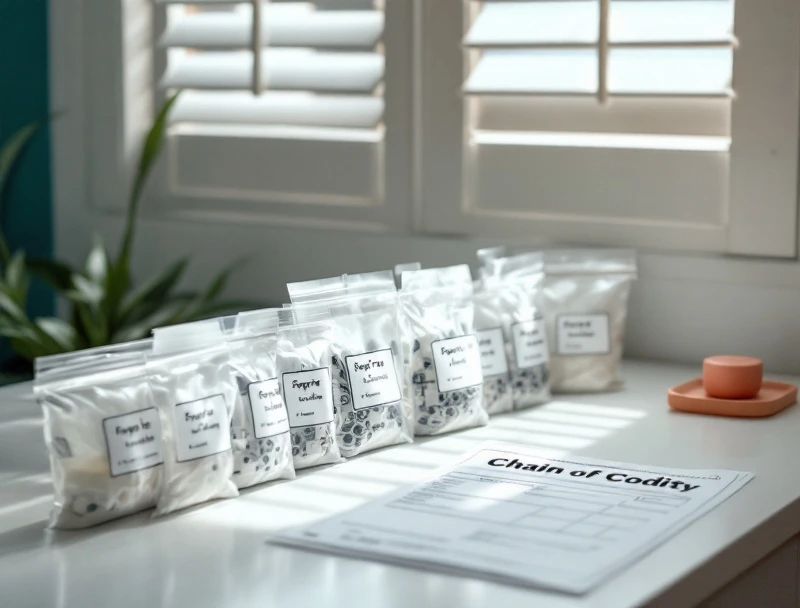
Air sampling, ERMI, HERTSMI-2, mycotoxin panels, and clearance testing — all processed by accredited independent laboratories.